You may already have a divorce from bed and board order in place, and the next question is the one that matters most now, can you finally end the marriage and move on? Or maybe your spouse got the DBB judgment first, and now you're trying to figure out whether you can remarry, sell the house, or close out the case for good. In North Carolina, that transition is real, but it's not automatic, and a DBB judgment by itself does not dissolve the marriage bond.
That confusion is common because the words sound similar while the legal effects are very different. A divorce from bed and board is a fault-based separation order. An absolute divorce is the final ending of the marriage. If you're dealing with nc absolute divorce after bed and board, the key question is how one fits into the other, what still has to happen, and what issues do not disappear just because a DBB exists.
When a North Carolina Separation Is Not Really Over
A Wake County spouse gets a DBB order after a hard year of conflict. The practical problem looks simple at first. They're living apart, the house feels split in two, and one spouse wants to remarry once things settle. Then the warning lands, the marriage still exists until an absolute divorce is entered.
That is why the label matters. A DBB is a court-ordered separation that leaves the marriage legally intact. North Carolina's courts treat it as a judicial separation, not an absolute divorce, and that difference controls whether the case is only changing living arrangements or ending the marriage bond. For a plain-language overview of separation in the state, see What Is Legal Separation in NC? and compare it with the court's description of separation and divorce at North Carolina Courts, Separation and Divorce.
Why the distinction matters in real life
If the marriage is still intact, remarriage is off the table. That alone can affect major decisions, especially when someone is trying to rebuild a life after months or years of separation. It can also affect housing, support, and how a judge views the parties' conduct while the case is still active.
A DBB can change where the spouses live and how the court addresses conduct, but it does not end the marital tie.
North Carolina's fault-based DBB system is unusual enough that people often assume it later becomes a divorce on its own. It does not. The next questions are whether the DBB rests on one of the grounds in G.S. 50-7, how it differs from absolute divorce, and what still has to be done before the marriage is finally over.
What Divorce From Bed and Board Actually Means
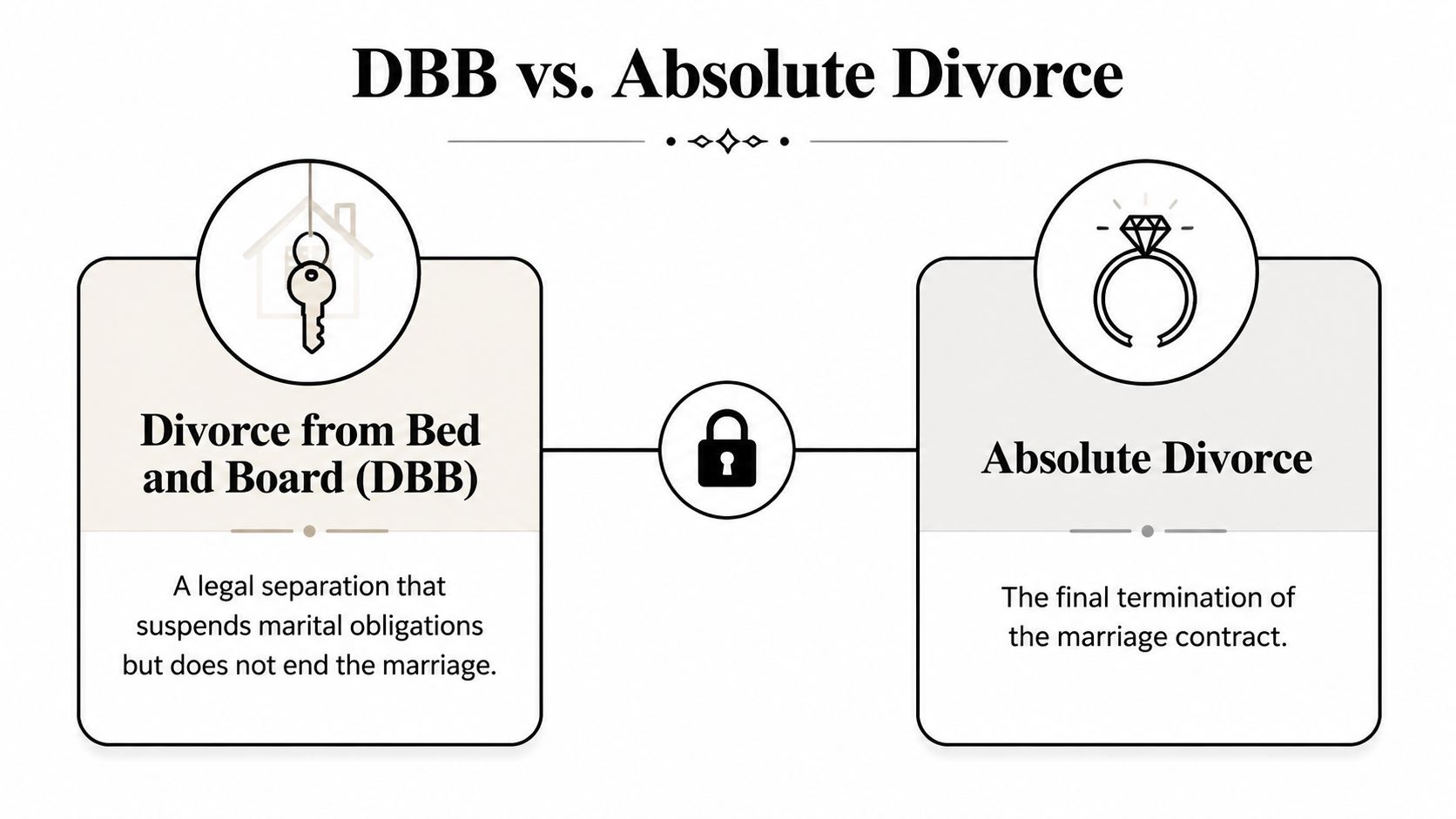
A DBB order changes the legal rules between spouses without ending the marriage. It works more like a court-ordered separation than a final breakup, because the spouses can be required to live apart and address misconduct, while the marital bond remains in place. An absolute divorce ends that bond entirely, so the legal relationship itself is terminated.
North Carolina treats divorce from bed and board as a fault-based claim under G.S. 50-7. That means the spouse asking for DBB must prove one of the statute's grounds, and the case has to fit the law's narrow categories rather than a general claim that the marriage has become unhappy. The UNC School of Government's bench book explains that the plaintiff must allege and prove the defendant's misconduct to obtain DBB (UNC School of Government Bench Book).
The five statutory grounds
The five grounds for DBB are abandonment, malicious expulsion from the home, cruel or barbarous treatment endangering life, intolerable indignities, and excessive alcohol or drug use. A claim under G.S. 50-7 must be tied to one of those categories, and a helpful overview of how those grounds are framed appears in this discussion of Divorce from Bed and Board NC Grounds. A sixth ground, adultery, may still matter in the broader fault-divorce conversation, but the DBB framework itself rests on those five statutory categories.
A cleaner way to read the rule is this. DBB is about provable misconduct, not just a painful marriage or a relationship that has run out of patience. The court needs facts, not frustration, and those facts have to line up with the statute.
How to File for Absolute Divorce in North Carolina is useful for the final divorce track because it lays out the residency rule, filing steps, and other requirements that come after separation.
The Five Fault Grounds Under G.S. 50-7
A DBB case usually starts with conduct that feels personal before it becomes legal. One spouse walks out without explanation. Another is locked out of the home. Another lives with behavior that has become dangerous or unbearable. North Carolina turns those lived experiences into narrow legal categories.
What each ground looks like in practice
Abandonment fits the spouse who leaves and refuses to return, or who makes clear they've ended the shared life without proper cause. Malicious expulsion covers the person who is pushed out of the marital home by the other spouse. Cruel or barbarous treatment endangering life involves conduct that crosses into physical danger, not just harsh words or bad moods.
Intolerable indignities is the ground that often feels hardest to pin down because it can involve a pattern of degrading conduct that makes daily life unbearable. Excessive alcohol or drug use applies when substance abuse makes the marriage life-burdening and not just difficult. The statute's focus is on misconduct serious enough to justify a judicial separation, not ordinary marital conflict.
A DBB claim is strongest when the facts are specific, dated, and documented. General complaints rarely carry the day.
A useful way to read the statute
If you're trying to decide whether your situation fits, ask two questions. First, did the spouse's conduct fall into one of the recognized categories? Second, can you prove it with evidence, messages, witnesses, records, or a clear timeline? If the answer to either question is shaky, the claim gets harder.
The line between a bad marriage and a DBB case matters because North Carolina family courts do not use DBB as a catch-all remedy. They use it for misconduct-based separation when the facts support the statute.
Limited Divorce Versus Absolute Divorce in North Carolina
The easiest way to compare the two is to ask what each one changes. DBB changes living obligations. Absolute divorce changes marital status. That difference is why people can have a DBB order and still not be legally free to remarry.
| Issue | Divorce From Bed and Board (Limited) | Absolute Divorce |
|---|---|---|
| Marital status | Marriage remains legally intact | Marriage ends |
| Living together | Cohabitation is suspended | No marital bond remains |
| Remarriage | Not allowed | Allowed after the divorce is final |
| Main legal purpose | Address fault-based separation and conduct issues | Permanently dissolve the marriage |
| Effect on the case | Can shape temporary housing, support, and strategy | Opens the door to final resolution |
Why the two remedies can exist in the same case
A DBB can solve an immediate problem, like getting one spouse out of the home or addressing misconduct. It does not resolve every issue attached to the marriage. That's why people often still need the absolute divorce later, even if they already won the DBB fight.
An absolute divorce in North Carolina follows a different track under state law. The central requirement is the one-year separation period, not fault. That is the main reason the state's divorce system can feel like two layers of one case, first the separation dispute, then the final dissolution.
Common misconceptions that cause trouble
People often assume DBB will somehow ripen into an absolute divorce without more filing. It won't. They also assume a DBB order decides every financial issue, which it doesn't. Property, debt, custody, and support can continue to move through the system long after the marriage is legally over.
The practical consequence is simple. If you stop at DBB, you may still be married for every legal purpose that matters most. If you need closure, remarriage rights, or a clean marital ending, the absolute divorce filing is the next step.
The One-Year Path From DBB to Absolute Divorce
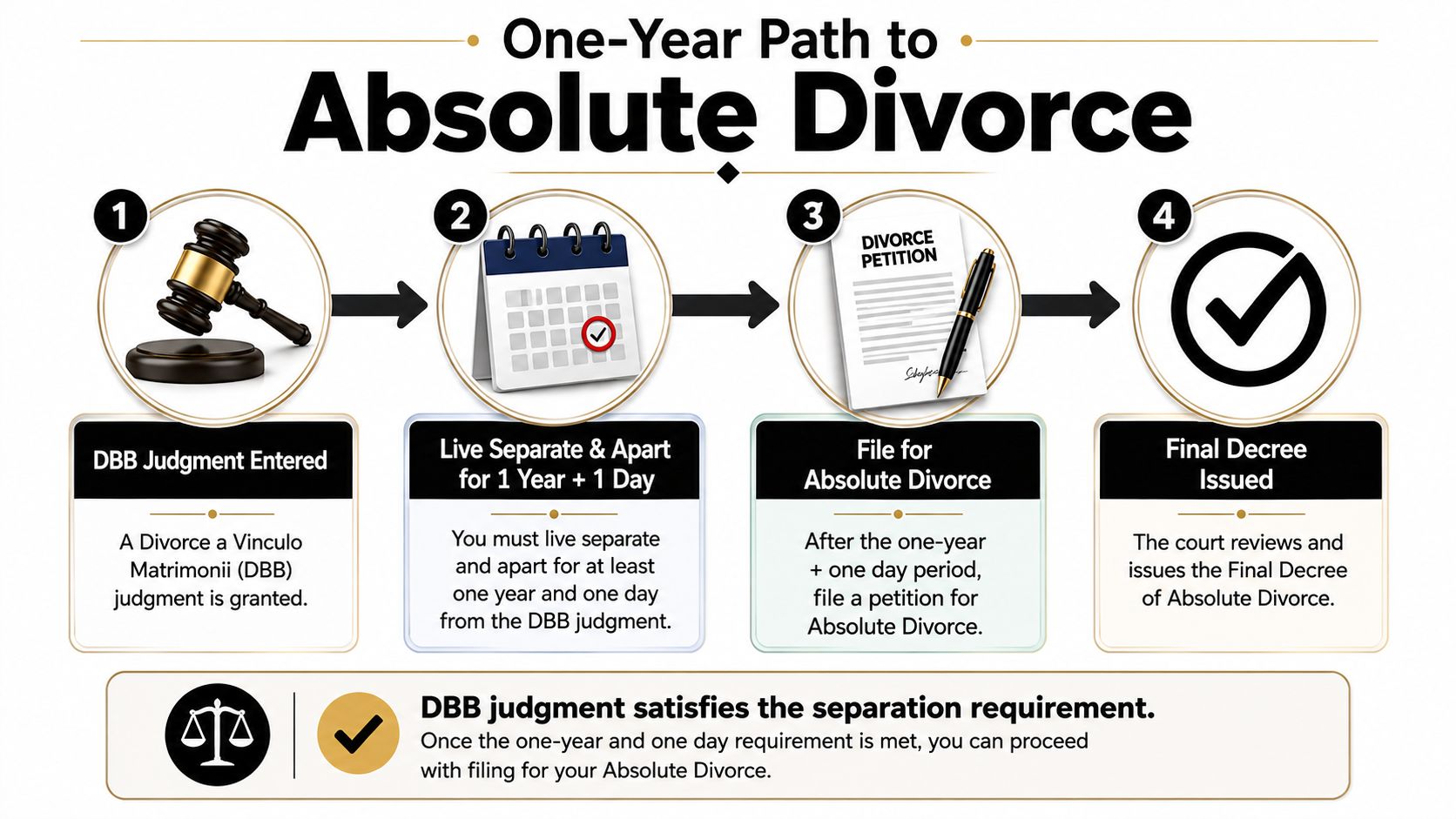
A DBB judgment can change the structure of a case, but it does not finish the marriage. North Carolina's absolute divorce law still uses the one-year and one-day separation rule, and that time requirement stays in place even after a DBB order. The DBB may help document what happened between the spouses, but it does not replace the statutory waiting period for a final divorce.
That means the divorce still begins with the usual filings. A spouse seeking absolute divorce typically files a complaint, proves residency, serves the other party, and submits any sworn materials the court requires. If property, custody, or support are still disputed, those issues need to be addressed as part of the overall case rather than left untouched until the marriage is dissolved (North Carolina Divorce Residency Requirements).
What the filing path usually looks like
Once the separation period has passed, the spouse asking for divorce files the case and serves the other side. If the matter is uncontested, it may move on a simpler track. If the other spouse objects, the court may need more paperwork and, in some cases, a hearing.
The older DBB order can make the separation history easier to explain, especially if there was a dispute about who left, when they left, or why the living arrangement ended. Even so, the order does not replace North Carolina's divorce requirements. For a plain-language explanation of the time rule itself, see the one-year separation rule in North Carolina. The DBB helps tell the story. The absolute divorce filing is still what ends the marriage.
When the timing can get tricky
Filing too early is the mistake that causes the most trouble. Another common error is assuming the DBB judgment starts a new divorce clock. In most cases, the clock runs from the date the spouses began living separate and apart, not from the later DBB order. The dates have to line up with the filing date, or the court may refuse to move the case forward.
Timing matters more than emotion here. If the separation date is wrong, the case can stall even when everyone knows the marriage is over.
If you want a simple roadmap for the filing stage, the one-year separation rule is the anchor point, and the paperwork follows from that date.
Side Issues That Travel From DBB Into the Absolute Divorce
A couple with two children and a jointly titled home may think the DBB resolved everything two years ago. Then they return for absolute divorce and discover the biggest issues are still waiting in line. That is normal in North Carolina.
Custody, support, and property issues do not disappear just because the marriage is ready to end. If there are children, the parenting arrangement may need to be enforced or modified depending on the order in place and how life has changed since the DBB. If there is support already in place, the court can still review what the spouses owe and whether the existing order needs enforcement.
What usually stays active between the two judgments
Equitable distribution becomes a central issue when the absolute divorce is filed. That is the stage where marital property and debt are addressed for final division. The house, retirement accounts, vehicles, and marital debts can all matter here.
Spousal support can also remain in play. Some people call it post-separation support or alimony, and the practical question is the same, who needs support, who can pay, and what evidence backs that up? A DBB judgment may influence the case, but it does not replace the support analysis.
A realistic example
If the spouses have been living apart under a DBB order and one parent has been handling most of the children's day-to-day needs, the absolute divorce stage is where the custody record matters. If one spouse has stayed in the marital home and the other has paid the mortgage, that history matters too. If the DBB order was ignored, enforcement may still be on the table.
The absolute divorce filing is often where the financial and parenting pieces finally get organized into a final court order.
That is why the second phase of the case feels heavier than people expect. DBB gets the separation started. Absolute divorce is where the longer-term consequences get sorted.
Practical Tips for Evidence, Timing, and Strategy
Good records can make a difficult case much cleaner. Keep dated notes about when the separation started, save texts and emails that show fault-based conduct, and hold onto any documents that support support or property claims. If the case involves children, preserve calendars, pickup logs, and school-related communications.
What to do before the next filing
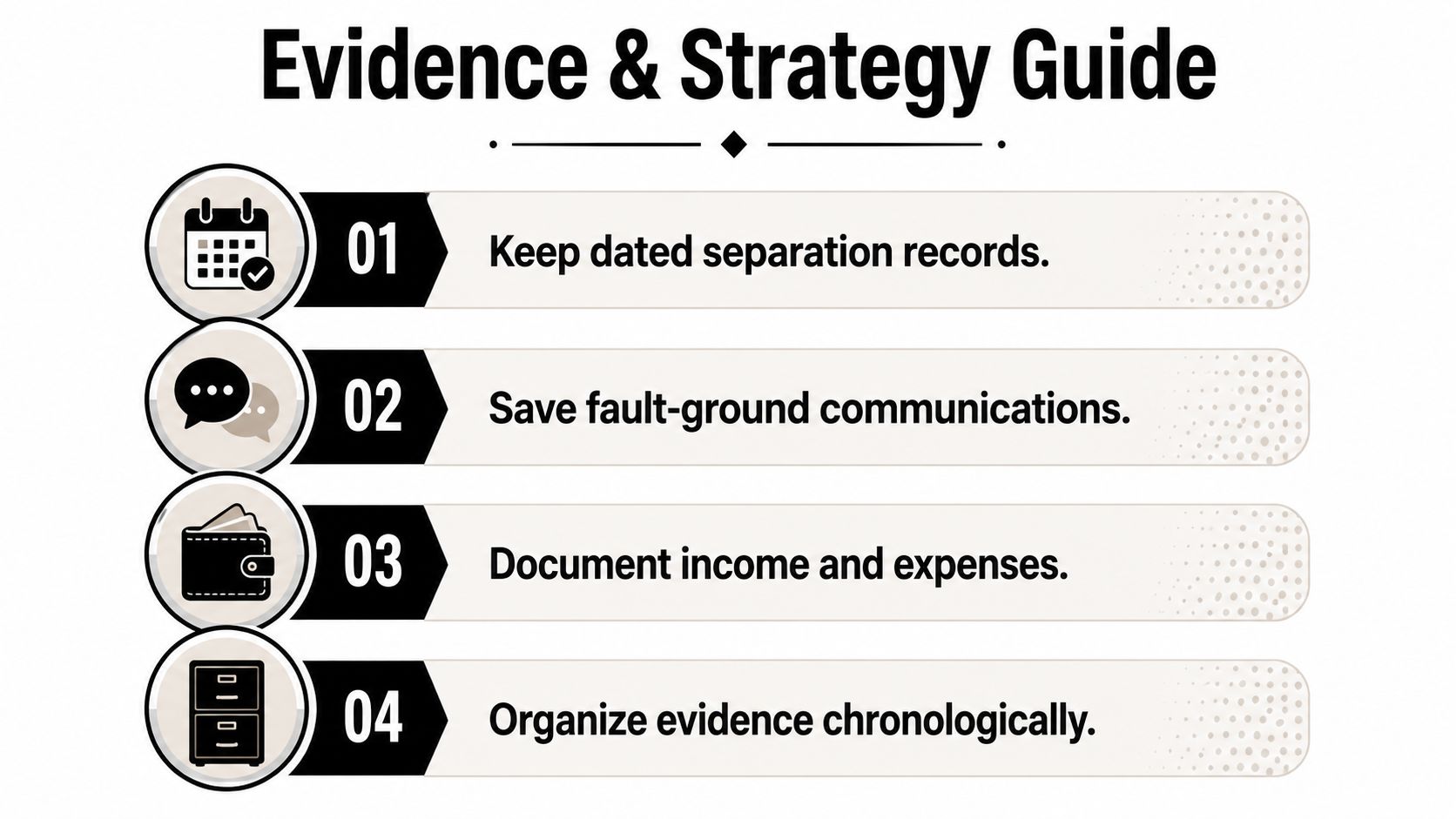
- Keep dated separation records. Save lease changes, move-out dates, and any message that shows when living together ended.
- Save fault-ground communications. Messages, emails, and voicemails can matter when you need to prove misconduct.
- Document income and expenses. Support and property cases often turn on what each spouse earns, owes, and spends.
- Organize evidence chronologically. A clean timeline is easier for a lawyer, a judge, and you to follow.
Common timing mistakes
People file before the separation period has fully run. They assume a DBB order solved the property dispute. They also forget that support and custody questions may still need separate attention. Those errors can cost time and create unnecessary conflict.
A North Carolina family law attorney can help spot those problems before they snowball. The Law Office of Bryan Fagan is one option for people who need help coordinating the DBB record, the absolute divorce filing, and the related family law issues in one case.
The biggest strategic mistake is waiting until everything is already broken in motion. If you know an absolute divorce filing is coming, get the documents in order now so the final step is not delayed by missing proof.
Frequently Asked Questions About NC Absolute Divorce After Bed and Board
Can I file for DBB and absolute divorce at the same time?
Sometimes people try to bundle everything together, but the legal requirements are different. DBB depends on fault-based misconduct, while absolute divorce depends on the separation rule and the rest of the filing requirements.
Is adultery still relevant in a DBB case?
Adultery can still matter in North Carolina family law disputes, but it is not one of the five DBB grounds listed in G.S. 50-7. It may still affect other parts of a divorce case, especially support strategy and credibility.
Does a DBB automatically turn into an absolute divorce?
No. A DBB is a separation order, not a final termination of the marriage. You still need the separate absolute divorce filing after the statutory separation period is satisfied.
What happens to children born or adopted during the DBB period?
Those children are treated like any other children of the marriage for custody and support purposes. The DBB does not erase parental rights or obligations, and the absolute divorce case may still need to address parenting orders.
Do I still need a lawyer if I already have a DBB order?
Many people do, because the final divorce stage can still involve custody, support, and property issues. A review from a North Carolina family law attorney can help you avoid filing too early or missing issues that need to be preserved.
If you're trying to move from DBB to a final divorce, the safest next step is a case review that focuses on your separation date, your records, and the issues still hanging over the marriage. North Carolina law is strict on timing, and the details matter.
If you're dealing with nc absolute divorce after bed and board, the Law Office of Bryan Fagan can help you sort out the separation timeline, the final divorce filing, and the related custody, support, and property issues that often travel with the case. Visit Law Office of Bryan Fagan to schedule a consultation and get clear guidance before you file.