You may be sitting at the kitchen table with a folder of screenshots, bank statements, and texts, trying to answer a hard question: what is this worth in North Carolina law? In an alienation of affection case, the answer is never a neat spreadsheet. A jury is asked to put a present cash value on the marital harm, and that means the emotional damage, the loss of support, and the lost companionship all matter in different ways.
North Carolina still recognizes alienation of affection as a civil claim, and the way damages are calculated is shaped by the state's pattern jury instructions and appellate decisions, not by a fixed statutory schedule. The practical question in how to calculate alienation of affection damages NC is not whether the injury was real, it's how to prove the harm in a way jurors can translate into money. That's where the evidence, timing, and framing of the claim become decisive.
Understanding What North Carolina Juries Actually Award
A spouse often comes in expecting a simple answer. “If the affair ruined my marriage, what do I get?” The law doesn't work like that in North Carolina. The jury is not handed a formula, and the court does not apply a preset amount for betrayal. Instead, jurors are told to decide the present value in money of the lost marital interests, plus injury to health, feelings, or reputation, under the state's pattern instructions and appellate guidance. North Carolina's pattern damages instruction makes that framework explicit.
A practical way to think about it is this. The jury is not trying to punish hurt feelings by itself, and it is not limited to direct bills either. It is measuring what was taken from the marriage and what that loss is worth in today's dollars. That includes support, consortium, and the broader marital relationship.
What “present cash value” means in real terms
The phrase present cash value matters more than most clients realize. If a harm affects future support or future companionship, the jury should not add up those losses at face amount. The instruction requires those future losses to be discounted to today's value, which is exactly why a careful damages presentation matters.
Practical rule: a strong damages case in North Carolina usually starts with a clear before-and-after story, not with a number pulled out of thin air.
This is also why expectations need to stay grounded. A claim can be legally valid and still produce a modest verdict if the evidence is thin. On the other hand, proof of a deep emotional collapse, lost support, and damaged reputation can move a case far beyond a symbolic award. For a broader overview of how these claims are presented in practice, the firm's discussion of an alienation of affection lawsuit in NC is a useful companion to the damages analysis.
The important takeaway is simple. North Carolina juries are deciding value, not just fault. That makes the evidence of harm, not the allegation alone, the center of the case.
Breaking Down the Categories of Recoverable Damages
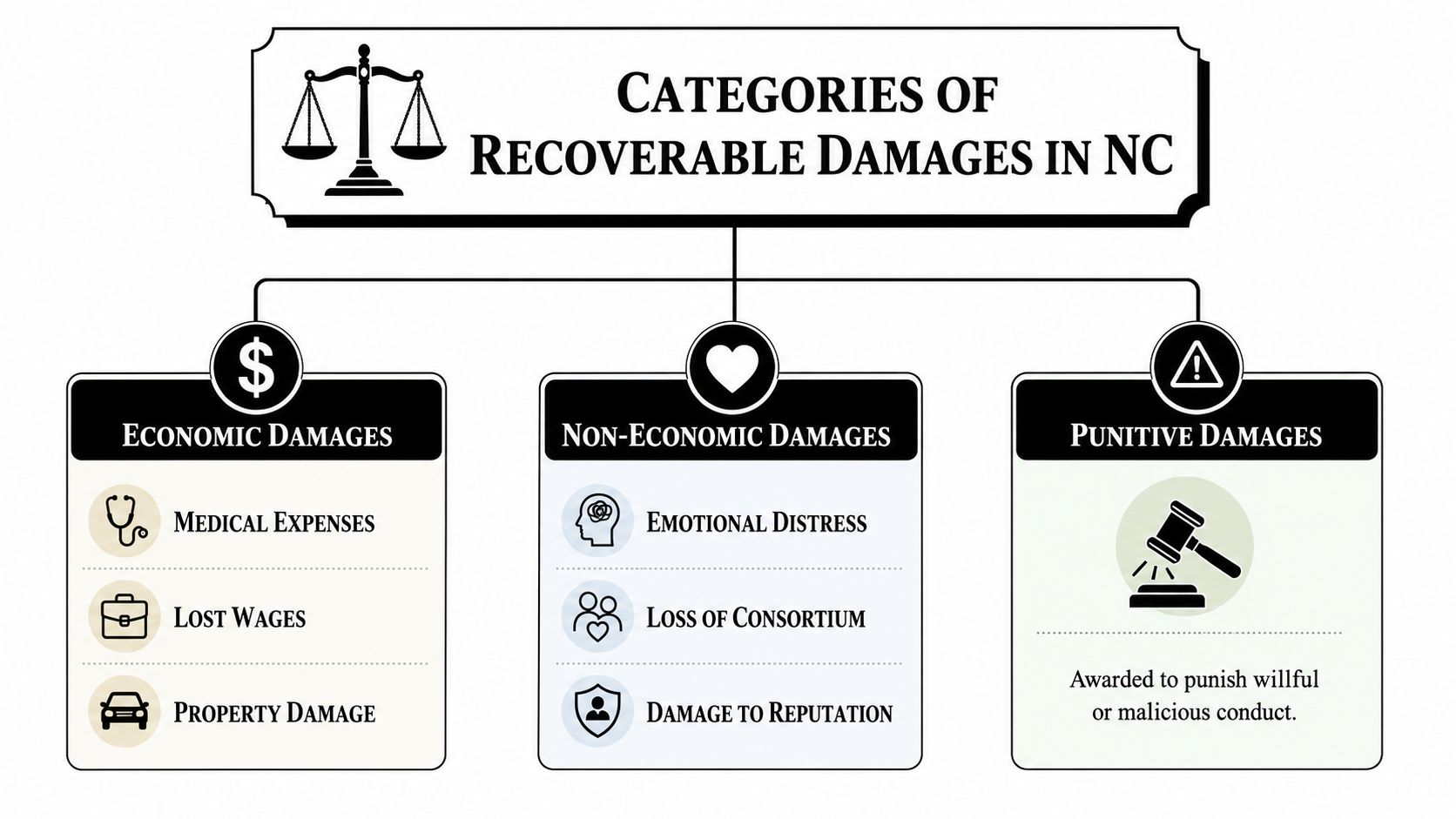
North Carolina's pattern instruction gives juries a wider damages framework than many clients expect. It allows recovery for the present value in money of lost support, consortium, and other legally protected marital interests, along with injury to health, feelings, or reputation. The state's alienation of affection damages instruction also permits nominal damages even when a plaintiff does not prove actual damages, and that usually means a token award such as one dollar.
Emotional harm and the loss of the relationship
Mental anguish is often the first thing clients describe, and juries do weigh it. The same is true for shame, humiliation, and the loss of sexual relations. These are not separate bonus items in the casual sense. They are parts of the larger injury to the marriage and to the spouse who lived through the breakdown.
A plaintiff who can show sleeplessness, panic, therapy, embarrassment in the community, or a sudden inability to trust a spouse again gives the jury concrete evidence to evaluate. A text message trail that shows repeated contact, a therapist's notes describing anxiety after discovery, or testimony that a client stopped attending church or neighborhood events because of the affair can all help translate hurt into a damages number. That does not turn every painful moment into its own line item. It gives the jury facts it can use to measure the total loss.
Financial and reputational losses
The instruction also covers loss of support, other economic loss, and injury to reputation. These categories matter most when the affair changed the household finances or made the injured spouse look foolish in front of friends, neighbors, or coworkers. A marriage is not just emotional. It often functions as an economic unit, and North Carolina juries may treat that reality as part of the harm.
The financial side often shows up in practical ways, such as reduced household contributions, extra living costs after separation, or a support pattern that changed once the relationship broke down. Reputation injury can be harder to price, but it becomes easier to explain when the affair became public, spread through a workplace, or left the injured spouse answering questions from people who knew the couple well. Those facts help the jury move from sympathy to valuation.
How nominal damages fit into the picture
Nominal damages matter because they recognize a technical injury even when the proof of money loss is thin. That may sound small, but it is still a real finding. It confirms that the wrongful interference happened, even if the evidence does not support a larger compensatory award.
If you are also dealing with related family-law issues, North Carolina Child Support Guidelines Explained is a useful reminder that North Carolina family cases often turn on a worksheet-based approach to financial proof, even though alienation damages themselves are not calculated by worksheet.
The categories juries usually hear about
- Mental and emotional harm: This includes distress, humiliation, shame, and the sense of being publicly betrayed.
- Relationship harm: This covers loss of consortium, which is the loss of marital companionship, affection, and intimate partnership.
- Financial harm: This includes lost support and other economic losses tied to the breakdown of the marriage.
- Reputation harm: This reflects embarrassment or damage to standing in the community.
Each of these categories is still valued in present money terms. Future losses are not counted at face value, and that difference can materially change the size of the case. A damages presentation that ignores that point leaves money on the table and gives the defense an easy attack on the numbers.
Gathering and Valuing Evidence for Each Damage Type
Damages are only as strong as the paper trail behind them. A jury can't value what it can't see, and in alienation cases that usually means the timeline of communications, the financial change in the household, and the human fallout after the affair became known. North Carolina lawyers often use records, testimony, and expert analysis to turn a painful story into usable proof, which is where the work of expert witness testimony can become relevant when the numbers or medical impact need clearer explanation.
What tends to move the needle
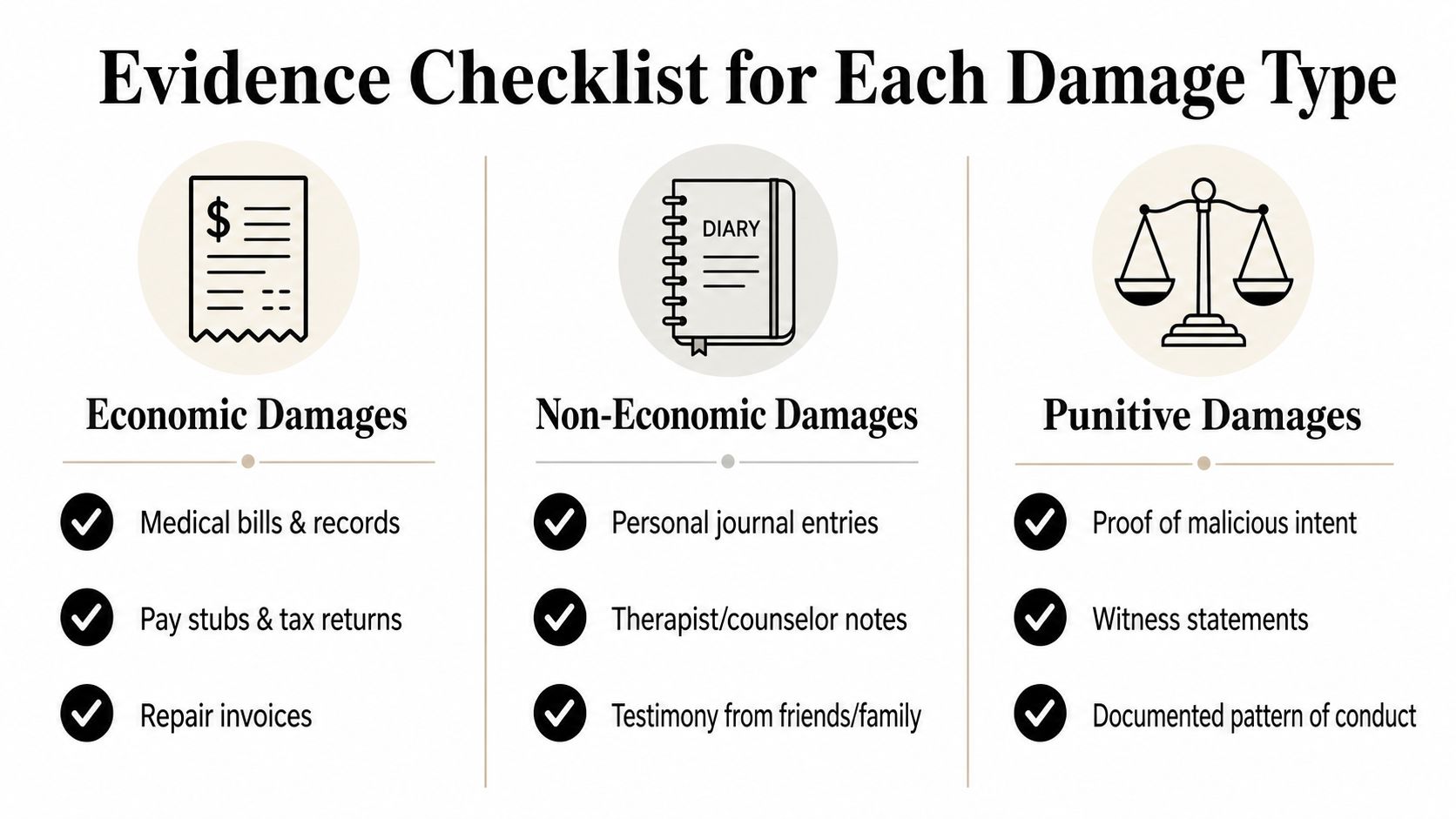
For economic harm, tax returns, pay stubs, household budgets, and proof of changed expenses help show support loss or related financial strain. For non-economic harm, therapist notes, journals, and testimony from friends or relatives can show the before-and-after contrast that jurors need to understand. For punitive issues, the focus shifts to behavior, messages, and patterns that help prove malicious or willful conduct.
Juries respond to specifics. A text thread at 2 a.m., a sudden move in household accounts, or a friend's description of the spouse's emotional collapse usually lands harder than a general statement that the marriage was “destroyed.”
A real-world style example
Consider a spouse who notices a sudden drop in household stability after weeks of repeated late-night messaging. The financial records show changing support patterns, the messages show continuing interference, and the therapist records show escalating distress. None of those items alone tells the whole story, but together they help the jury value the harm in money terms.
That same document discipline matters for deadlines too. Don't Lose Your Rights: Filing Claims Before NC Divorce Is Final is relevant for related North Carolina claims, because some family-law rights have to be preserved before an absolute divorce is granted. Different claim, different deadline, same lesson, timing matters.
The practical habit that helps most is simple. Save messages, log dates, and preserve financial changes as they happen. Reconstructing a paper trail months later is always harder, and usually less persuasive, than preserving it in real time.
Calculating Punitive Damages Under North Carolina Law
Punitive damages are not automatic in an alienation of affection case. The plaintiff has to prove the defendant acted maliciously, willfully, or wantonly, and that is a higher bar than proving the marriage was harmed. North Carolina appellate authority confirms that punitive damages are available in this setting when that level of misconduct is shown, and it ties the calculation to the state's punitive cap in N.C. Gen. Stat. § 1D-25.
The cap matters because it changes the ceiling the moment compensatory damages are decided. Under the statute, punitive damages may not exceed three times compensatory damages or $250,000, whichever is greater. The appellate decision discussing alienation damages and punitive limits makes that relationship important for anyone evaluating settlement negotiations or trial risk.
How the cap works in practice
- If compensatory damages are modest, the punitive cap can still reach the statutory floor if that is greater than three times the compensatory amount.
- If compensatory damages are substantial, the punitive ceiling rises with them because the statute uses the three-times multiplier.
- If punitive conduct is not well supported, the cap never matters because punitive damages may not be awarded at all.
Practical rule: the compensatory number is not just part of the verdict, it can also determine the maximum punishment exposure.
| Punitive Damages Cap Examples | |||
|---|---|---|---|
| Compensatory Award | 3x Compensatory | Statutory Cap Applied | Maximum Total Recovery |
| Example 1 | 3x the compensatory amount | Greater of 3x or $250,000 | Compensatory plus capped punitive amount |
| Example 2 | 3x the compensatory amount | Greater of 3x or $250,000 | Compensatory plus capped punitive amount |
| Example 3 | 3x the compensatory amount | Greater of 3x or $250,000 | Compensatory plus capped punitive amount |
The strategic point is clear. A stronger compensatory case does more than help on the base award. It can also expand the punitive ceiling if the evidence supports that kind of claim. That makes the damages presentation, especially the emotional and reputational proof, directly relevant to the total recovery discussion.
Navigating Procedural Limits and Burden of Proof
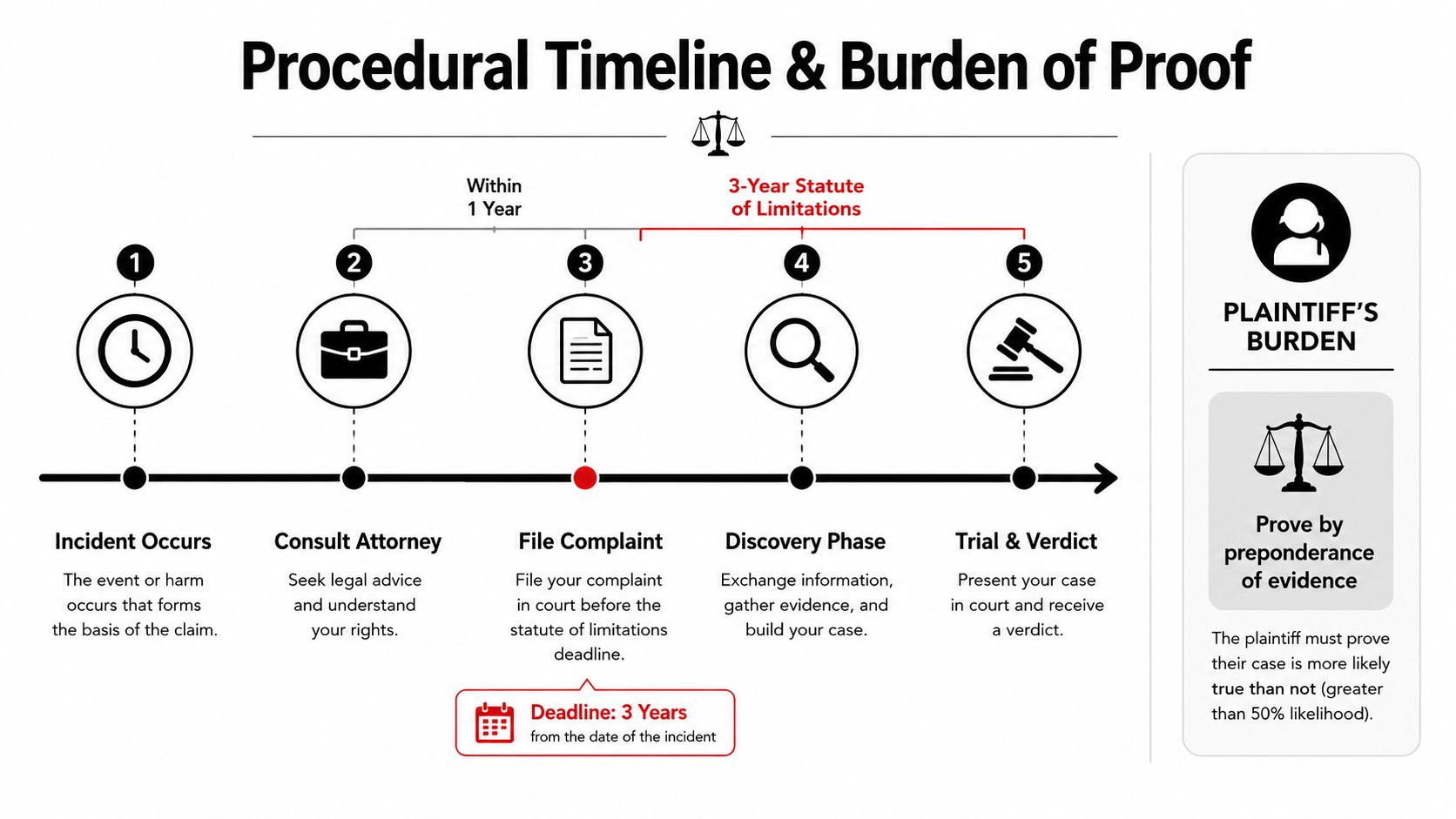
North Carolina still recognizes alienation of affection, but the claim has to be filed within 3 years of the defendant's last actionable conduct. North Carolina family-law guidance on alienation claims explains the nuance that matters most, for criminal conversation, the clock runs from the last sexual intercourse, while for alienation of affection later conduct like calls or texts can extend the interference timeline if the conduct kept the claim alive.
Why timing changes the damages picture
If the claim is late, evidence of the most painful period may never reach a jury. That matters because the timing of the defendant's conduct often affects what can be proved about emotional harm, lost support, and the decline in companionship. A client who waits too long can still have a story, but the usable story may be much smaller.
What “greater weight of the evidence” means
North Carolina pattern instructions say the plaintiff bears the burden of proving actual damages by the greater weight of the evidence. In plain English, that means the jury has to believe the plaintiff's version is more likely true than not. It is not proof beyond a reasonable doubt, but it is still a real evidentiary burden.
A lot of clients assume that obvious betrayal equals obvious money. It doesn't. The jury has to connect the conduct to the loss, and then decide the money value of that loss. That's why texts, witnesses, therapy records, and financial records matter so much.
Practical consequences for a case
- Late filing can shrink the claim: Some of the conduct that made the case feel strongest may be outside the usable period.
- Weak proof can limit recovery: A jury can find the wrongful conduct happened and still award only nominal damages.
- Good preservation helps both liability and damages: The same records that show interference also help establish the value of the harm.
If you're trying to assess whether your case is still viable, the first questions are usually simple. When did the conduct stop, and what evidence do you still have? Those two answers often tell the lawyer more than a long emotional summary ever will.
Strategic Considerations for Negotiation and Trial
Damage numbers drive strategy. If the evidence is strong, the case may justify pushing harder in mediation or preparing for trial. If the paper trail is thin or the defendant's financial situation makes collection doubtful, a large verdict may sound impressive and still be hard to turn into real recovery. North Carolina civil practice gives room for settlement, but the smartest position usually comes from knowing what a jury is likely to do with the evidence.
Trial leverage versus settlement certainty
A case with detailed messages, corroborating witnesses, and strong emotional proof tends to create more settlement pressure. Defendants know juries can value marital harm seriously when the facts are clear. A weaker case, especially one built mostly on suspicion, gives the defense room to minimize emotional distress or argue the marriage was already deteriorating before the third party appeared.
That defense theme shows up often. It doesn't automatically defeat the claim, but it can reduce the amount jurors are willing to award if the plaintiff can't show what the marriage looked like before the interference. Careful documentation and a realistic damages theory matter more than heated arguments.
Collectability still matters
A verdict is not the same thing as money in hand. If the defendant lacks assets or meaningful insurance coverage, the practical value of the judgment can be limited. That reality often pushes parties toward settlement because both sides know the cost of trial may exceed the likely collection value.
Bottom line: the right settlement number is not the one that sounds biggest, it's the one that reflects the proof, the risks, and the ability to collect.
For North Carolina residents, a consultation with a firm that handles family-law and civil disputes can help sort out that risk. The Law Office of Bryan Fagan works across family-law issues where timing, financial proof, and procedural protection all matter, and those same skills are often useful in a damages-driven claim.
Protecting Your Rights with Experienced North Carolina Legal Guidance
Alienation of affection damages in North Carolina are not guessed at, and they are not fixed by a chart. They're built from evidence, timing, and a jury's judgment about the present value of what was lost. An attorney who works regularly in North Carolina family law can identify the strongest damage categories, preserve evidence before it disappears, and present the claim in a way that matches how juries are instructed to decide it.
If you're dealing with this now, don't wait for the paper trail to fade or the deadline to get closer. A focused consultation can help you understand what your case may support, what it may not, and what needs to be done right away.
If you're trying to figure out how your facts fit North Carolina's damages rules, the Law Office of Bryan Fagan can help you evaluate the claim, preserve the right evidence, and understand your options before key deadlines pass. Visit Law Office of Bryan Fagan to schedule a consultation and talk through your situation with a North Carolina family-law team.