When you're facing a divorce, understanding the process can feel like the first step toward regaining control. A North Carolina divorce lawyer does more than just file paperwork—they are your advocate, guiding you through state-specific rules like mandatory separation periods and the nuances of property division. Their focus is on protecting your rights and helping you build a stable foundation for your future.
Understanding the North Carolina Divorce Process
The path to divorce in North Carolina is a structured legal journey with its own unique rules. Unlike many other states, you can't just decide to file for divorce one day. The law here requires a mandatory physical separation before you can even begin the formal process.
This timeline gives you a simplified look at how a case progresses, from the moment of separation to the final divorce judgment.

The most important thing to grasp is that the clock doesn't start until you and your spouse are physically separated. That said, you don't have to wait the full year to start tackling critical issues like child custody and financial support with your attorney. In fact, addressing those issues early on through a Separation Agreement is often the best strategy.
Key Legal Concepts in a North Carolina Divorce
While your attorney will manage the complex legal details, knowing these core concepts will empower you to play an active role in your own case.
- One-Year Separation: According to North Carolina General Statutes § 50-6, you and your spouse must live in separate residences for one full year with the intent for the separation to be permanent. Only after this period can a judge grant a divorce.
- Equitable Distribution: This is the legal term for dividing the property and debt you acquired during your marriage. It doesn't automatically mean a 50/50 split. Instead, a North Carolina court aims for what it determines is fair or "equitable." A skilled lawyer is crucial for advocating a division that protects your financial well-being.
- Alimony and Post-Separation Support: These are payments from one spouse to a dependent spouse. It's important to know that marital misconduct, like adultery, can be a complete bar to receiving alimony in North Carolina, making experienced legal advice essential.
- Child Custody: All custody decisions are based on the “best interest of the child” standard. A North Carolina divorce lawyer helps you create a parenting plan that genuinely supports your children's stability and development.
While divorce is always difficult, the actual rate in North Carolina has seen a significant drop over the decades. It fell from 5.1 per 1,000 people in 1990 to just 2.7 in 2023. This trend might suggest that while fewer couples are divorcing overall, the cases that do move forward often involve more complex financial or personal issues that demand a careful legal strategy.
This structured process ensures every issue is addressed methodically. For a more detailed breakdown, you can review our guide on the steps for divorce in North Carolina. Having an attorney who can interpret these laws for your specific situation isn't just helpful—it's essential for protecting your rights.
How to Research and Vet Potential Lawyers

Finding the right North Carolina divorce lawyer isn't just about Googling names. It's about finding a strategic partner who will protect you during one of the most critical transitions of your life. Your first job is to build a shortlist of candidates who focus specifically on North Carolina family law.
A great starting point is the North Carolina State Bar's directory. Before you even think about calling someone, you should verify they are licensed and in good standing. Many attorneys also list their practice specialties on their Bar profile, giving you a quick way to filter for those who concentrate on family law.
Differentiating a Specialist from a Generalist
While any lawyer can file the paperwork for a simple, absolute divorce, cases involving children, property, or a family business demand specialized knowledge. A general practitioner might get the job done, but a dedicated family law attorney understands the nuances of North Carolina’s equitable distribution laws and the unwritten rules of your local courthouse.
- Real-World Scenario: Consider a common situation where a couple co-owns a successful small business in Raleigh. A generalist lawyer might treat the business like a car, suggesting you just split its book value. This approach completely overlooks goodwill, future earning potential, and significant tax implications—a mistake that could cost you hundreds of thousands of dollars.
- A family law specialist, on the other hand, knows immediately to engage a business valuation expert. They understand how to structure a buyout, negotiate an offset with other marital assets, or manage a sale, all while working to keep the business from collapsing under the strain of the divorce.
That distinction is everything. A specialist is in family court day in and day out, dealing with the same judges and opposing counsel. They have a level of experience and insight a generalist simply can't offer.
Don't overlook a law firm's website. A site filled with detailed attorney bios and genuinely helpful articles about North Carolina divorce shows they are authorities in their field. It proves they aren't just taking cases—they are actively leading the conversation.
Using Referrals and Online Reviews Effectively
Personal referrals from friends, family, or other professionals like your CPA can be a great resource. But always remember that no two divorce cases are the same. The lawyer who was perfect for your friend’s uncontested split may not have the experience for your high-conflict custody battle.
Use online reviews to get a feel for a lawyer’s communication style and professionalism, but read them with a healthy dose of skepticism. Instead of focusing on one outlier review, look for consistent patterns. If multiple clients mention an attorney was responsive, clear, and compassionate, that’s a good sign.
It's also vital to get a handle on the financial side of things. Learning more about how divorce costs are determined in North Carolina will help you set realistic expectations from the very beginning.
Ultimately, your research should give you a focused list of attorneys who specialize in North Carolina family law and seem to have experience relevant to your specific needs. From there, you can start scheduling consultations to find the right advocate for you.
The True Role of Your Divorce Lawyer
Many people think a divorce lawyer just files some papers to make a divorce official. But in North Carolina, a skilled divorce attorney is your strategic partner, tasked with protecting your financial future and family stability from start to finish.
Their work isn't just about ending the marriage; it's about building the legal foundation for your new life.
From the very beginning, your lawyer guides you through a complex legal landscape. They will handle the filing of the Complaint for Divorce, the official document that kicks off the court process once you’ve met the state’s mandatory one-year separation period. But their most critical work often starts long before any papers are filed.
More Than Just Filing Paperwork
So, what does a divorce lawyer really do? Their primary job is to protect your rights when it comes to property, financial support, and your children. Think of them as your negotiator, investigator, and legal shield, all working to get you a fair outcome under North Carolina law.
Take property division, for instance. North Carolina follows a rule called equitable distribution, which is far more nuanced than just splitting assets 50/50.
It’s common for one spouse to have handled all the family finances, leaving the other completely in the dark about their true net worth. You might not know the full value of retirement accounts, a small business, or hidden investment portfolios.
This is where your lawyer steps in. They initiate a formal discovery process to:
- Uncover all financial records, including bank statements, tax returns, and business ledgers.
- Accurately value complex assets like pensions, 401(k)s, and real estate, often bringing in financial experts.
- Negotiate a settlement based on a complete and accurate financial picture.
This strategic approach is what makes the difference between a simple filing service and comprehensive legal representation. You can get a much clearer picture of how this works by learning more about what equitable distribution means in North Carolina and its direct impact on your assets.
Key Responsibilities of a NC Divorce Lawyer
This table outlines the primary areas a North Carolina divorce lawyer manages during the divorce process, from initial filing to final resolution.
| Area of Focus | What Your Lawyer Does | Relevant NC Legal Standard |
|---|---|---|
| Property Division | Identifies, values, and negotiates the division of all marital assets and debts. | Equitable Distribution (N.C.G.S. § 50-20) |
| Spousal Support | Files for or defends against claims for post-separation support and alimony based on need and ability to pay. | Dependent Spouse Standard (N.C.G.S. § 50-16.3A) |
| Child Custody | Develops and negotiates a parenting plan that protects your parental rights and serves your child's needs. | "Best Interest of the Child" (N.C.G.S. § 50-13.2) |
| Child Support | Ensures support is calculated correctly using state guidelines, income data, and other required factors. | Income Shares Model |
| Legal Filings | Manages all court documents, deadlines, and procedural requirements from the initial complaint to the final decree. | NC Rules of Civil Procedure |
As you can see, their role is comprehensive, ensuring every critical aspect of your case is handled with professional diligence and in compliance with North Carolina law.
Advocating for Your Family's Future
Beyond assets and debts, your lawyer's role is crucial for securing your family’s immediate and long-term stability, especially when it comes to spousal support and children.
If you were financially dependent on your spouse, your attorney can file for post-separation support and alimony to create a vital income stream after you separate. On the flip side, if you are the supporting spouse, they will work to make sure any obligation is fair, reasonable, and based on accurate financial information.
In matters of child custody, your lawyer’s guidance is centered on North Carolina's "best interest of the child" standard, as defined in N.C.G.S. § 50-13.2. They help you develop a parenting plan that fosters stability, addresses your children's needs, and protects your parental rights every step of the way.
Preparing for Your Initial Consultation

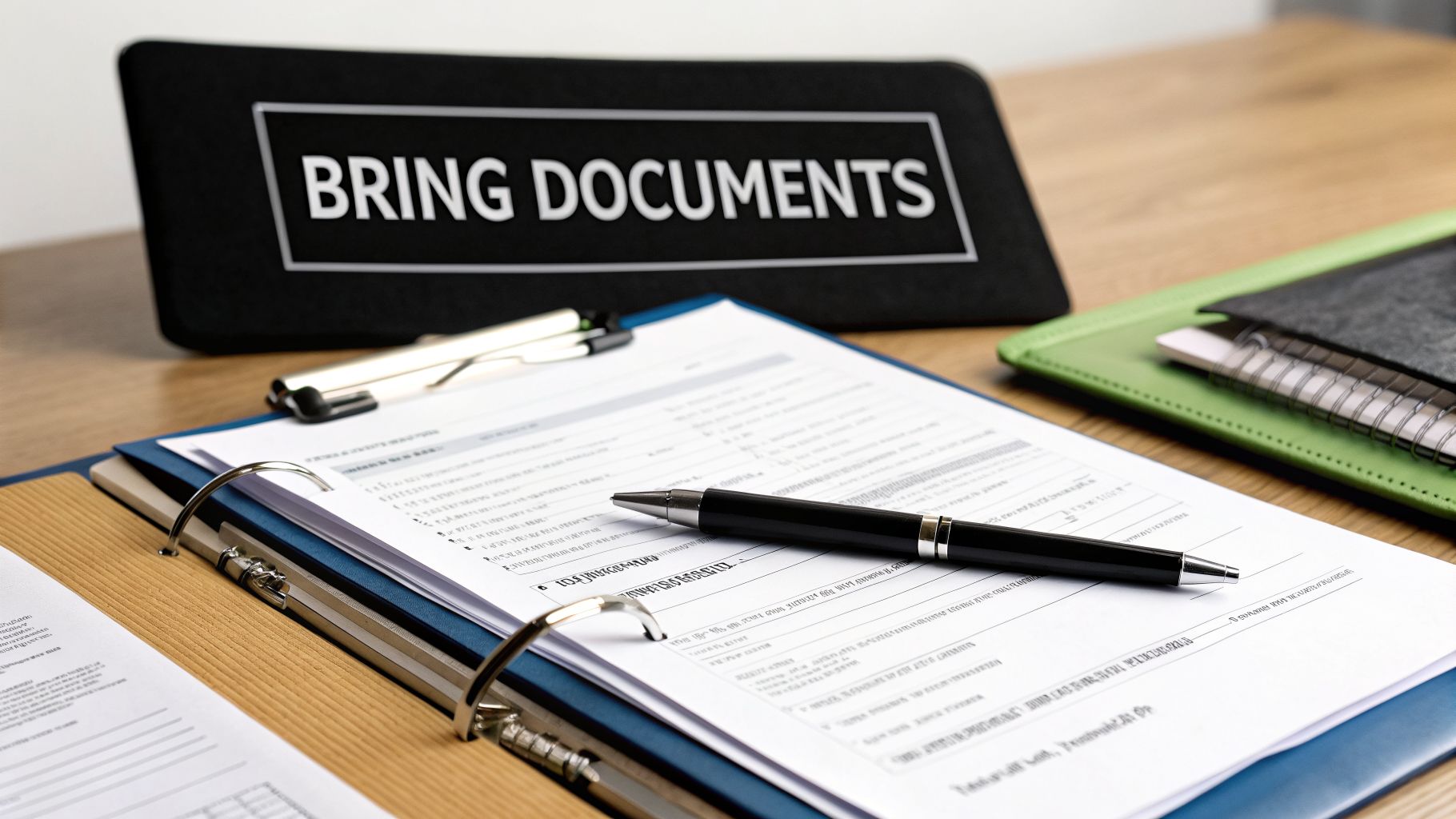
The first meeting with a potential divorce lawyer is your opportunity to take control. This isn’t just a meet-and-greet; it’s an interview where you are assessing the attorney. Coming prepared can transform a general chat into a focused, productive strategy session.
An organized approach helps the attorney move past hypotheticals and offer concrete advice tailored to your situation. It shows you’re serious and allows them to start strategizing for you from the very first conversation.
What to Bring With You
Your goal is to give the attorney a quick but clear snapshot of your marital finances and personal situation. A recent, accurate picture is far more valuable than a decade of old statements.
Try to gather these key documents:
- Recent Tax Returns: Your last two years of joint tax returns give a fast overview of your family’s income and financial picture.
- Current Pay Stubs: These verify your current income and, if you can get them, your spouse’s. This is crucial for any discussion about potential support.
- Bank and Investment Statements: Bring the most recent statements for your main checking, savings, retirement, and investment accounts.
- A List of Assets and Debts: You don’t need a formal spreadsheet. Just jot down major assets (house, cars, 401(k)s) and debts (mortgage, car loans, credit cards) with approximate values or balances.
Common Concern: Don’t panic if you can't get everything, especially if your spouse has been in control of the finances. Just do your best. A North Carolina divorce attorney understands that this is often just a starting point for the formal discovery process used to obtain missing information.
Organizing Your Thoughts Is Just as Important
Paperwork is only half the battle. The stress of divorce can make it hard to think clearly on the spot. Before you walk into that meeting, take some quiet time to write down your thoughts so you don’t leave forgetting your most important questions.
Focus on outlining these key points:
- A Brief Timeline: Note your date of marriage and, critically, your date of separation. In North Carolina, the one-year separation requirement is absolute, so this date is non-negotiable.
- Your Top Three Priorities: What outcome is most important to you? Is it staying in the family home? Securing a particular custody arrangement? Protecting your business or retirement?
- Your Biggest Worries: What keeps you up at night? Are you concerned about not having enough money to live on, how your spouse might react, or losing time with your children?
This simple exercise helps you steer the conversation toward what matters most.
By taking the time to prepare, you empower your potential North Carolina divorce lawyer to become your advocate from day one.
Making the Right Choice and Moving Forward
After a few consultations, you’re at a critical juncture. Choosing a North Carolina divorce lawyer isn't just about finding the lowest retainer fee; it's about selecting a trusted advocate to guide you through one of life's most difficult chapters.
You’ve done your research and asked the hard questions. Now, it's time to reflect. This decision is a mix of professional competence and personal comfort—a choice that will shape the path ahead.
Factors Beyond the Fee
While cost is always a practical concern, it shouldn't be the only thing driving your decision. The cheapest lawyer can quickly become the most expensive if they don't have the right strategy or experience for your case.
Before you make that final call, think about these crucial elements:
- Confidence in Their Strategy: Did one lawyer stand out by presenting a clear, logical plan for your biggest worries, whether that’s custody, property division, or alimony?
- Communication Style: Did you feel heard and understood? You need to pick someone whose communication habits fit your own, whether you need frequent updates or just the major developments.
- Comfort and Trust: Your gut feeling is important here. You'll be sharing deeply personal information, so a strong sense of trust isn't just a bonus—it's essential.
Remember, you are hiring a partner for a deeply personal legal process. The best North Carolina divorce lawyer for you is one who not only understands the law but also understands you and your goals.
What Happens After You Hire Your Lawyer
Once you've made your choice, the next step is to formally hire your attorney. This process brings clarity to the start of the attorney-client relationship and sets clear expectations.
First, you’ll sign the retainer agreement. This is a formal contract that spells out exactly what legal services will be provided, the fee structure, and the responsibilities for both you and the law firm. Take your time, read it carefully, and ask questions before signing.
With the agreement signed, you'll pay the initial retainer fee. Your lawyer will hold these funds in a trust account and draw from it to cover the time and costs associated with your case. This payment officially creates the attorney-client relationship, allowing your lawyer to start working for you.
Your first official meeting will be a dedicated strategy session. Here, you and your attorney will dive deep into the specifics of your case, fine-tune your goals, and map out the immediate next steps. From there, your lawyer will start taking action—whether that means filing initial court documents, opening communication with your spouse’s attorney, or starting the formal discovery process to gather financial information. Making this choice empowers you to move forward with a professional advocate dedicated to protecting your future.
Frequently Asked Questions (FAQ)
Do I need a lawyer for an uncontested divorce in North Carolina?
While you can technically file for an uncontested divorce on your own, it carries significant risks. A divorce decree only does one thing: it legally ends your marriage. If you don't also have a properly drafted Separation Agreement, you permanently lose your right to ask a North Carolina court to handle critical issues like property division (equitable distribution) and alimony. An attorney ensures all loose ends are tied up, protecting your financial future.
How much does a North Carolina divorce lawyer cost?
The cost depends on the complexity of your case. Most family law attorneys charge an hourly rate and require an upfront retainer (a deposit they bill their time against). A simple, uncontested divorce where all issues are resolved might cost a few thousand dollars. A contested case involving disputes over custody, a business, or alimony will be more expensive due to the increased time required for negotiation, discovery, and potential court appearances. A reputable attorney will be transparent about their fees and potential costs during the initial consultation.
What is the one-year separation rule in NC?
Under North Carolina General Statutes § 50-6, you and your spouse absolutely must live physically separate and apart for one full year before you can file for an absolute divorce. This means living in two different homes with the intention of making the separation permanent. While this waiting period is mandatory for the final divorce, a lawyer can help you immediately file claims and resolve issues like child custody, child support, and post-separation support right after you separate.
Does adultery affect a divorce in North Carolina?
For the divorce itself, no. North Carolina is a no-fault state for granting divorce. However, for alimony, adultery has a major impact under state law. If the financially dependent spouse is proven to have committed adultery, they are completely barred from receiving alimony. Conversely, if the supporting spouse is proven to have committed adultery, the court must award alimony to the dependent spouse. An experienced attorney can explain how this could affect your specific case.
Can I get divorced if my spouse lives in another state?
Yes, as long as North Carolina has jurisdiction. To file for divorce in North Carolina, at least one spouse must have been a resident of the state for a minimum of six months before filing the divorce complaint. The one-year physical separation rule still applies. A North Carolina divorce lawyer can help you navigate the procedural steps for serving a spouse who lives out of state.
Navigating a divorce in North Carolina isn't just about knowing the law; it's about having a strategic partner who protects your interests at every turn. The team at the Law Office of Bryan Fagan is here to provide North Carolina residents with the experienced, client-focused advocacy you need to move forward with confidence. If you're facing divorce in North Carolina, don't wait to get the answers and support you deserve. Schedule a consultation with our dedicated North Carolina attorneys today.