A lot of people who search for a name change after divorce in NC are in the same place emotionally. The divorce is moving, or already finished, and one practical question keeps hanging over everything else. Do I keep this name, or do I take back the one that feels like mine?
For some, it's about consistency with children. For others, it's privacy, professional identity, or closure. Whatever your reason, North Carolina law gives you a workable path. The key is choosing the right one at the right time.
North Carolina offers two different legal routes to resume a former name after divorce. One is simpler, cheaper, and cleaner when handled inside the divorce itself. The other is still available after the divorce is final, but it takes more steps. If you're still in the middle of the process, this decision belongs on your checklist alongside the larger issues in a North Carolina divorce case.
Reclaiming Your Name After a North Carolina Divorce
A name change after divorce often sounds like a minor administrative task. In real life, it rarely feels minor. It can affect your driver's license, payroll records, bank accounts, and how you introduce yourself every day.
North Carolina does make this easier than many people expect. Under N.C. Gen. Stat. § 50-12, certain former names may be resumed in connection with divorce. That matters because this is not the same as asking a court for a completely new name for personal reasons. The law creates a specific route for people leaving a marriage.
Why timing matters
The biggest strategic choice is simple. You can ask for the name change during the divorce, or you can handle it after the divorce is final. Both options may work, but they do not work the same way.
If you're still preparing paperwork, timing can save you effort later. If your divorce is already over, you still have a path. The right approach depends on where your case stands and whether you're resuming a name the statute allows.
A name change tied to divorce is usually easiest when it is planned early, written clearly into the court paperwork, and carried through to the final judgment.
What this process is really about
Clients often worry that asking to resume a former name will complicate the divorce. In most routine cases, it doesn't. It is usually a straightforward request when handled properly.
A practical example helps. If a wife took her spouse's surname at marriage and now wants to return to her maiden name, that request fits squarely within the statutory process. If someone wants an entirely unrelated new surname, that is a different legal procedure and should not be treated as a simple divorce-related change.
Your Two Legal Paths for a Name Change in NC
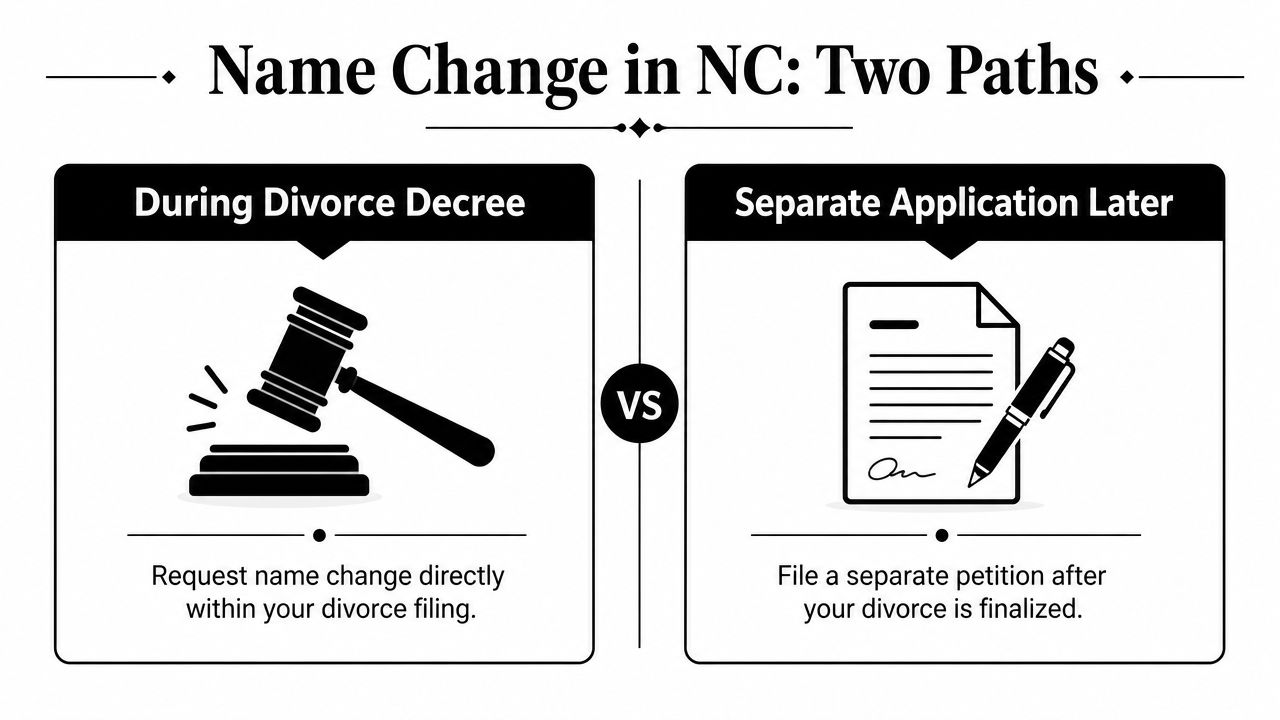
North Carolina gives divorcing spouses two main paths when they want to resume a former name. The first is to include the request in the divorce pleadings and final judgment. The second is to file separately with the Clerk of Superior Court after the divorce is over.
Path one inside the divorce case
This is usually the cleaner option. If you are the plaintiff, the request should appear in the complaint. If you are the defendant asking for the change, it should be raised in the answer or counterclaim. When the court includes that relief in the final divorce judgment, you leave with one court document that does double duty. It ends the marriage and confirms the resumed name.
This route also pairs well with early case planning. If you're still determining whether you're eligible to file, North Carolina Divorce Residency Requirements explains the six-month residency rule for filing divorce in North Carolina.
Path two after the divorce is final
This route is for people who didn't ask during the divorce, didn't realize they could, or changed their mind later. You file an application with the Clerk of Superior Court to resume a former name.
It still works. But it is more of a separate errand. You have to prepare the filing, deal with the clerk's process, and wait through the required notice period before the application is accepted.
The real trade-offs
Here is the practical comparison most clients need:
| Factor | During divorce | After divorce |
|---|---|---|
| Cost | $0 if included in the original divorce decree under N.C. Gen. Stat. § 50-12 | $10.00 to file post-divorce with the clerk |
| Paperwork | Folded into documents you are already filing | Separate filing and separate follow-up |
| Proof for later updates | Certified divorce decree usually serves as the needed proof | Separate post-divorce name resumption paperwork becomes part of your proof trail |
| Complexity | Lower when requested correctly at the start | Higher because it adds another process |
Cost difference: In North Carolina, changing one's name after divorce is legally structured to cost $0 if the request is included in the original divorce decree under N.C. Gen. Stat. § 50-12, whereas filing a post-divorce application to the Clerk of Superior Court costs exactly $10.00. This is significantly lower than the $120.00 filing fee required for a formal Chapter 101 petition for a completely new name, which also requires newspaper publication, as summarized by this North Carolina name change after divorce guide.
That last point is where people get tripped up. A divorce-related resumption of a former name is not the same as a full adult name change petition. If you use the wrong procedure, you may create extra cost and paperwork for yourself.
The Easiest Route Requesting Your Name Change During Divorce
If your divorce hasn't been finalized, this is usually the route to consider first. It keeps the issue inside one case file and avoids a separate trip through the clerk's process later.
Where the request belongs
North Carolina practice is procedural. That means where you ask matters almost as much as what you ask for.
If you filed the divorce, your request to resume a former name should be in the Complaint. If your spouse filed first and you are responding, the request should be in your Answer or Counterclaim. The point is to put the request in front of the judge before the final judgment is entered.
A simple example of language to discuss with your attorney is:
Plaintiff respectfully requests that upon entry of the Judgment of Absolute Divorce, Plaintiff be permitted to resume the former name of [former legal name].
Or, if you are the defendant:
Defendant requests that upon entry of the Judgment of Absolute Divorce, Defendant be permitted to resume the former name of [former legal name].
That language isn't magic. Clear placement in the proper pleading is what matters.
Why this route works so well
When the judge signs the final divorce judgment with the name resumption included, you generally have a single court document to use afterward. That often makes the next phase easier because agencies and institutions usually want one clean legal record showing your authority to use the resumed name.
Clients like this route because it reduces loose ends. You are already gathering documents, filing papers, and moving the divorce toward judgment. Adding the name request at that stage is often more efficient than starting fresh later through a separate filing path.
A practical filing checklist
Use this checklist before the divorce judgment is entered:
- Confirm eligibility for the former name. Make sure the name you want to resume fits the statutory categories allowed in North Carolina.
- Place the request in the correct pleading. Complaint for the plaintiff. Answer or counterclaim for the defendant.
- Review the spelling carefully. One typo in a middle name, suffix, or prior surname can create headaches when you update identification later.
- Check the final judgment before entry. The order should reflect the exact former name you want restored.
For readers dealing with the larger filing process, How to File for Absolute Divorce in North Carolina is a useful companion resource on the basic procedural steps.
Filing a Separate Petition After Your Divorce Is Final
Sometimes the divorce is already done and the name issue was never addressed. That doesn't end the matter. North Carolina allows a post-divorce filing to resume a former name, but you need to follow the clerk's process carefully.
The form and the filing
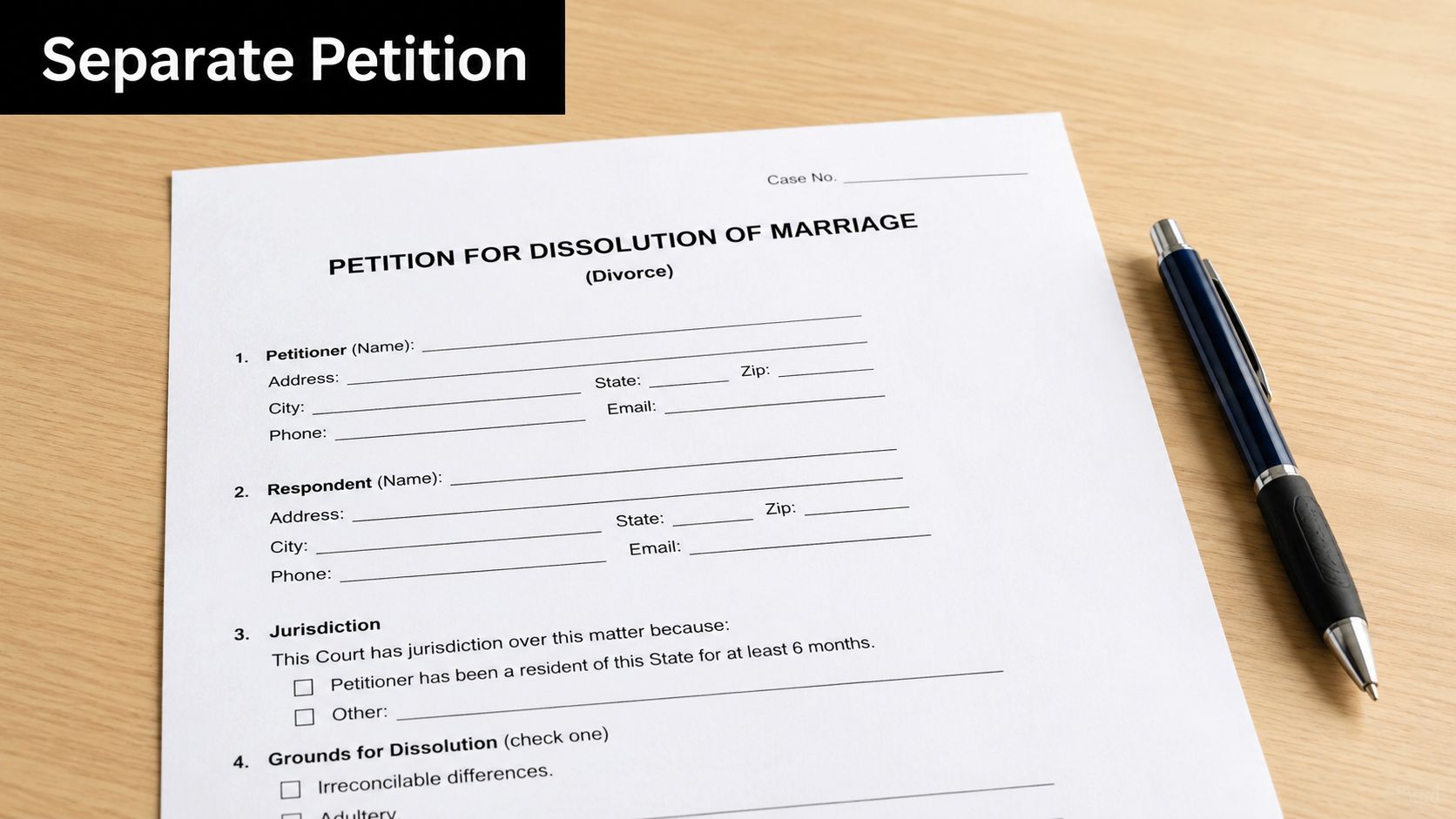
The form commonly used for this process is the Application for Resumption of Former Name (AOC-SP-600). You file it with the Clerk of Superior Court in your county.
This route is still limited to resuming a former name allowed by law. It is not the shortcut for a brand-new personal choice name.
According to this North Carolina family law article discussing AOC-SP-600, the most efficient way to resume a former name is within the divorce complaint or counterclaim. If filed after the divorce, the Application for Resumption of Former Name costs $10 and requires a 10-day public notice posting. The same article explains that a standalone adult name change is different. It costs $120 and requires notarized affidavits of good character and FBI/state background checks.
What the notice requirement means
The notice requirement tends to surprise people. In the post-divorce process, a Notice of Intent to Change must be posted on the Superior Court bulletin board for the required period before the clerk accepts the application for resumption.
That doesn't necessarily make the process difficult. It does make it less immediate. If you need your documents updated quickly for employment, travel, or banking, that extra procedural step matters.
A realistic post-divorce roadmap
A practical way to approach this filing is:
- Get the correct form. Use AOC-SP-600, not a generic name change petition.
- Complete it carefully. Match your divorce paperwork and prior legal name exactly.
- Go to the correct clerk's office. File in the county where the process should be handled.
- Pay the filing fee. The clerk's filing for this resumption process is $10.
- Account for the public posting period. Don't plan on same-day completion if the posting requirement hasn't been satisfied.
If you're already divorced and simply want to resume a qualifying former name, the clerk's application route can work well. It just isn't as streamlined as putting the request into the divorce judgment the first time.
Making It Official Updating Your Identity Documents
Once the court paperwork is done, the legal issue shifts into an administrative one. Many people experience frustration at this stage. The court may have restored the name, but every institution in your life still has the old one until you update it.
Start with the document that tends to anchor the rest of the process.
Start with Social Security
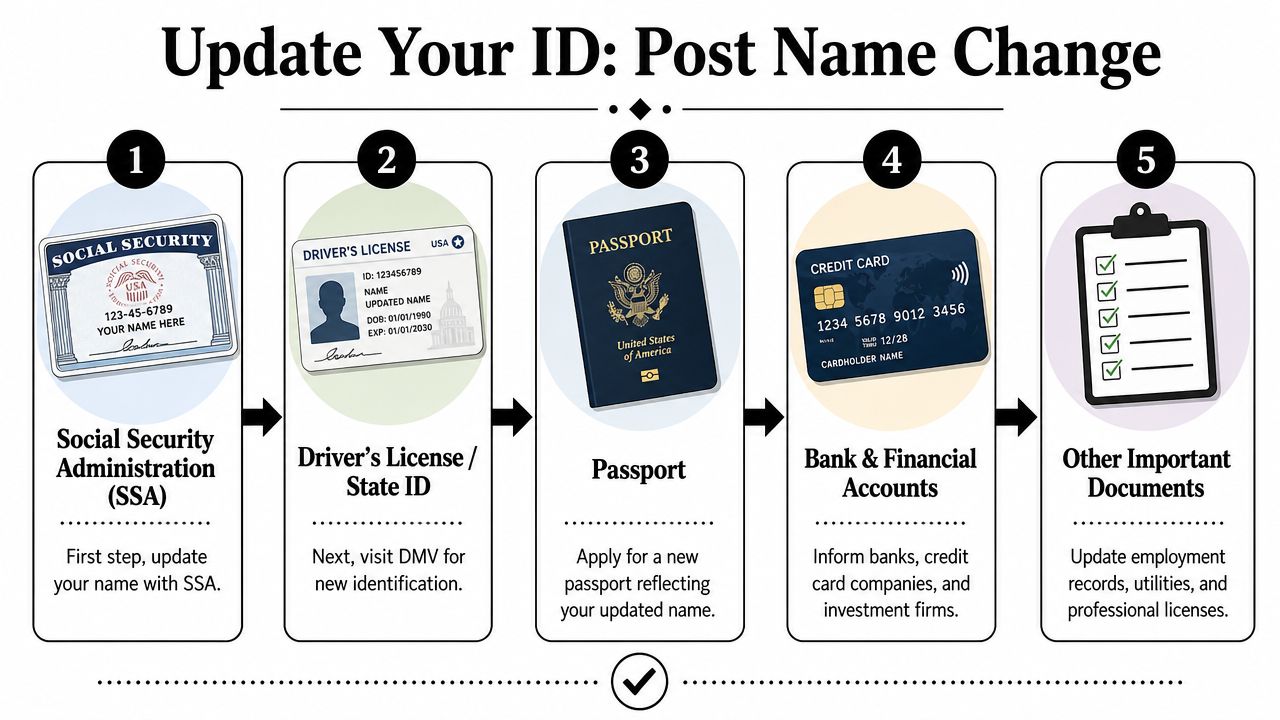
In most cases, your Social Security record should be updated first. Other agencies and employers often rely on that record matching your legal name.
Bring the court document that proves the name change. Depending on how your name was resumed, that may be a certified divorce decree or the clerk-issued paperwork from the post-divorce process. Use certified copies when possible. Agencies often prefer them, and some won't accept plain photocopies.
Then handle your North Carolina identification
Once the Social Security record is corrected, move to your North Carolina driver's license or state ID, where spelling consistency matters. If the court paperwork, Social Security record, and DMV application don't match, you may be sent away to fix the discrepancy first.
A good working order is:
- Social Security Administration
- North Carolina DMV
- Passport
- Employer payroll and HR records
- Banks and credit card accounts
- Insurance, utilities, and professional licenses
This video gives a practical overview of the identification update process after a name change:
Use a document-by-document checklist
People often try to update everything at once and miss key records. A slower, organized approach usually works better.
- Government records first. Update Social Security and your driver's license before tackling private accounts. Those records often enable the rest.
- Financial accounts next. Banks, credit cards, retirement accounts, and mortgage servicers may each ask for a certified copy of the court document.
- Employment records soon after. Your payroll name, benefits records, and tax forms should all match your legal identification.
- Travel documents carefully. If you have upcoming travel, check the name on your ticket against the ID you will use.
- Licenses and credentials last, but don't forget them. Nurses, teachers, contractors, and other professionals often need matching name records across boards and employers.
Keep a small paper trail
Create one folder, physical or digital, for every name change document. Keep certified copies, receipts, and a running list of which institutions have already updated your name.
A practical example. If your bank updates your checking account but your credit card division does not, automatic payments can start failing under mismatched account credentials. The legal step may be complete, but inconsistent records can still create everyday problems.
Practical rule: Don't surrender your only certified copy of a court document unless you are certain the agency will return it. Order and keep extras when possible.
Watch for lingering mismatch problems
Some records update quickly. Others don't. If your paycheck, insurance card, and driver's license all show different names for a period of time, that doesn't necessarily mean the court order failed. It usually means one of the institutions is behind or needs another copy.
This is also where exact spelling becomes important again. A missing suffix, changed middle name format, or typographical error can stall multiple updates. When that happens, go back to the court document first. The rest of the system usually follows that lead.
Common Pitfalls and When to Consult an Attorney
Most North Carolina name resumptions after divorce are manageable. Problems tend to arise when someone assumes this process does more than it actually does.
Mistake one asking for a completely new name
Consider a common scenario. A woman divorces and decides she doesn't want to return to her maiden name or keep her married name. She wants a different surname entirely because it feels like a fresh start.
That is understandable. It is also not the simple divorce-related resumption process. The statutory right tied to divorce is limited. If you want a completely new legal name, you may be dealing with the separate adult name change procedure instead.
Mistake two missing the request during divorce
Another scenario is procedural. A husband or wife intends to resume a former name but never includes the request in the complaint, answer, or counterclaim. The divorce is finalized, and only then does the omission become obvious when they try to update identification.
That usually means another filing step after the fact. It may still be fixable, but it often costs time and creates more paperwork than necessary.
Mistake three relying on informal changes
Some people start using the former name socially before obtaining the proper court paperwork. They update email signatures, introduce themselves differently, and maybe even ask a local office to change a record informally.
That can create confusion fast. Schools, banks, lenders, and government agencies usually want formal legal proof. Informal use is not the same thing as legal authority.
When legal help becomes important
You should consider speaking with counsel if any of these apply:
- Your decree contains an error. A misspelled prior name can block later updates.
- An agency refuses your paperwork. That can signal a document problem, not just a clerk's preference.
- You want a name outside the divorce resumption categories. That likely calls for a different proceeding.
- The divorce is contested and the paperwork is already complex. It may be better to build the request correctly now than repair it later.
If your situation has moved beyond a routine filing, a North Carolina divorce lawyer can review the decree, the pleadings, and the agency response to identify the cleanest next step. The Law Office of Bryan Fagan handles North Carolina family law matters, including divorce-related procedural issues, and is one option for residents who want legal guidance on the filing route that fits their case.
Frequently Asked Questions About NC Name Changes
Do I need my ex-spouse's permission to change my name after divorce in North Carolina
Usually, no. If you are resuming a former name that North Carolina law allows in connection with divorce, this is generally your legal request to make. It is not typically something your former spouse gets to veto because they dislike it.
Can I change my name during the divorce instead of waiting until afterward
Yes. In many cases, that is the cleaner approach. The request should be included in the correct divorce pleading so the judge can address it in the final judgment. If that opportunity has passed, the separate clerk filing may still be available.
How long do I have to resume my former name after divorce
North Carolina allows a post-divorce process for resuming a qualifying former name, so missing the issue in the divorce itself does not always mean you have lost the opportunity. The better question is usually practical, not theoretical. The longer you wait, the more likely you are to deal with inconsistent records across work, banking, insurance, and identification.
Can I use this process to pick an entirely new last name
No, not usually. The divorce-related process is for resuming a former name that fits the statute. A completely new name generally requires a different legal procedure than the narrow resumption route tied to divorce.
What documents will I need after the court approves the name change
You will need the court document proving the resumed name and should expect to present certified copies when updating major records. Start with Social Security, then move to your North Carolina driver's license or state ID, followed by financial, employment, and other personal records.
If you're considering a name change after divorce in North Carolina, a short legal consultation can save a great deal of avoidable delay. The Law Office of Bryan Fagan works with North Carolina residents on divorce and related family law issues, including questions about how to request a name resumption during a pending case or how to address it afterward. If you want clarity about the right filing path for your situation, schedule a consultation.