If you're separating or thinking about divorce, the house is usually the hardest issue to talk about. It isn't just an asset on a spreadsheet. It's the place where your children sleep, where bills get paid, where memories live, and where a lot of your monthly budget is tied up.
One frequently asked question in the first conversation is: who gets the house in a divorce in North Carolina? The short answer is that North Carolina doesn't have a winner-takes-all rule. A judge doesn't automatically give the house to the spouse who wants it more, earns more, or appears on the deed.
The Most Stressful Question in a North Carolina Divorce
A common situation looks like this. One spouse wants to keep the home so the children can stay in the same school. The other spouse wants their share of the equity and doesn't want their name left on the mortgage. Both are worried about money. Both think the house should go their way.
That tension is normal. North Carolina sees a substantial number of divorces, and one summary reports a divorce rate of 3.2 divorces per 1,000 residents in 2021, with the state ranking 18th in the nation. The same summary reports a marriage rate of 6.2 per 1,000 residents. It also notes that to file for divorce in North Carolina, at least one spouse must have lived in the state for six months before filing, and the spouses must have lived separate and apart for one year before an absolute divorce can be granted, according to this North Carolina divorce rate and filing overview.
Those timing rules matter because property issues usually get worked out during separation and the divorce process. They don't get resolved by an automatic rule that hands the home to one side.
The question usually isn't who "deserves" the house. The real questions are how the home is classified, how much equity exists, and whether keeping it is financially possible.
In real cases, the outcome often turns on a mix of family needs and hard numbers. If one parent will be the children's primary custodian, that can matter. If neither spouse can afford the mortgage alone, that matters too. If the home gained or lost value after separation, that can change negotiations.
The legal standard is fairness. In North Carolina, that word has a specific meaning in property division, and understanding it gives you a much clearer view of what may happen with your home.
Understanding North Carolinas Equitable Distribution Law
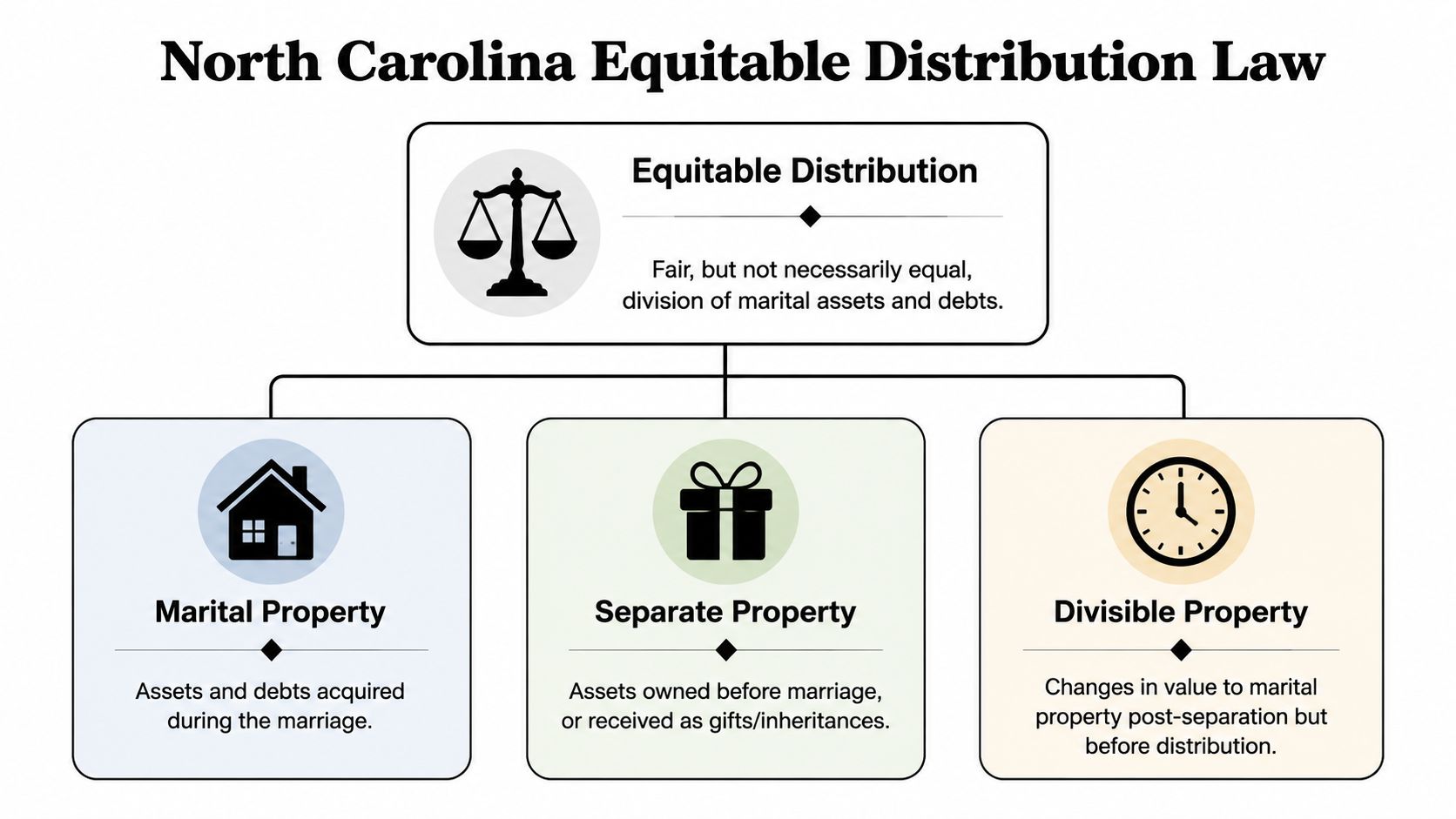
North Carolina divides property under equitable distribution, found in N.C.G.S. § 50-20. That phrase sounds technical, but the practical meaning is straightforward.
Core principle: Equitable distribution means the court aims for a fair division of marital property, not an automatic award of the house to either spouse.
North Carolina starts with a 50/50 presumption for marital property, then allows the court to decide whether an unequal split is more fair based on 12 statutory factors, including the custodial parent's need to occupy the marital residence, as explained in this guide to North Carolina house division and equitable distribution.
What fair means in a house case
Fair doesn't always mean one spouse keeps the house. It can mean several different things:
- One spouse keeps the home: That spouse may receive the residence and the other spouse may receive other assets or a distributive award.
- The home is sold: The proceeds can then be divided as part of the overall property division.
- The house is offset: One spouse keeps the house while the other receives more from retirement accounts or other marital property.
A fair result depends on the full marital estate, not just the walls and roof.
Factors that often matter most
The statute lists multiple factors, but in day-to-day practice, several issues come up repeatedly in house disputes:
- Income and liabilities: If one spouse can realistically carry the home and the other can't, that will affect settlement discussions.
- Length of the marriage: A longer marriage often means the finances are more intertwined.
- Tax consequences: The way property is divided can create tax issues that should be addressed before signing anything.
- Children and housing stability: If one parent needs to remain in the home with the children, that can be relevant.
If you're trying to understand your options under this framework, a North Carolina equitable distribution lawyer can review the home, debt, title documents, and broader asset picture together. That matters because house disputes rarely stand alone. They usually connect to retirement accounts, support questions, and cash-flow problems after separation.
Misconceptions that hurt people
People often walk into divorce with one of these assumptions:
- If my name is on the deed, I automatically get the house.
- If my spouse moved out, I automatically keep it.
- If the children live there, the house must stay with me.
None of those rules controls the case by itself. The court looks at the larger equitable distribution picture. That is why strategy matters early, especially before anyone agrees to refinance terms, move-out dates, or a buyout amount.
How Courts Classify and Value the Marital Home
Before anyone decides who keeps the house, the court has to decide what kind of property it is and what value is being divided. Those two issues, classification and valuation, often control the result.

North Carolina does not follow an automatic "whoever is on the deed gets the house" rule. The key issue is classification and valuation. If the house was acquired during the marriage, it is generally marital property, and the relevant divisible value is usually the home's equity. Courts can reach a fair result through a buyout, asset offset, or distributive award instead of focusing only on title, as explained in this discussion of North Carolina property classification and home equity division.
The three classifications that matter
In a North Carolina divorce, the home usually falls into one or more of these categories:
- Marital property: Property acquired during the marriage and before separation.
- Separate property: Property owned before marriage, or received individually as a gift or inheritance.
- Divisible property: Certain changes in value related to marital property after separation but before distribution.
A simple example helps. If you and your spouse bought the house during the marriage, the home is often treated as marital property even if only one of you is listed on the deed. If one spouse owned the house before marriage, part or all of the property may be separate, but that doesn't end the analysis if marital money was later used in connection with the home.
Why equity matters more than title
The asset that usually gets divided is not the physical house by itself. It's the equity in the property.
That means a house with a large mortgage may look valuable from the street but produce a much smaller distributable value than people expect. On the other hand, a modest home with little debt can be one of the biggest assets in the marriage.
In many cases, the fight isn't over the address. It's over the equity and how to balance it against everything else the couple owns.
The valuation date can change the case
North Carolina uses the date of separation as the key valuation date for marital property. That matters if the market moved, repairs were made, or debt changed while the divorce was pending.
For example, one spouse may say, "The house is worth more now, so I should receive more." Another may argue that the relevant value ties back to separation. Those issues can become technical quickly, especially when appraisals, paydowns, or post-separation changes are involved.
If you can't agree on value, attorneys often work with appraisers, mortgage records, and financial statements to pin down a supportable number. Without that groundwork, settlement talks tend to drift into guesswork.
Three Common Ways to Settle the Marital Home Issue
Most house disputes in North Carolina end in one of three practical resolutions. The best option depends on cash flow, children, available assets, and whether either spouse can carry the home after divorce.
Option one is selling the house
Selling is often the cleanest solution. It converts the house into cash, pays off the mortgage, and reduces future conflict over repairs, taxes, and refinancing deadlines.
Selling tends to work best when neither spouse can comfortably afford the property alone, or when both want a hard financial break. The drawback is emotional. Parents may not want the children to move, and spouses may disagree about timing, listing decisions, or what repairs should happen before sale.
Option two is a buyout
A buyout means one spouse keeps the house and compensates the other for that spouse's share of the equity. That compensation may happen through cash, refinancing, or a structured distributive award.
This is often the preferred option when one spouse wants housing stability, especially if children will remain in the home. The challenge is simple but serious. Wanting the house and being able to afford it are not the same thing.
Option three is offsetting the house with other assets
Sometimes the spouse who keeps the house doesn't write a check right away. Instead, the parties balance the numbers by awarding the other spouse more of another marital asset, such as retirement funds or investment accounts.
This can preserve the house without forcing a sale. It can also create new problems if the asset values are hard to compare, or if one asset is easy to use while another is difficult to access.
If negotiation is still possible, divorce mediation in North Carolina can be one way to work through these trade-offs without asking a judge to decide every detail.
Comparing options for the marital home in NC
| Option | Best For | Key Challenge |
|---|---|---|
| Sell the house | Spouses who want a clean break and immediate resolution of the home | Letting go of the home and coordinating the sale |
| One spouse buys out the other | Families seeking stability, especially when one spouse wants to remain in the home | Finding funds and qualifying for financing |
| Offset with other assets | Couples with enough other marital assets to balance the equity | Valuing assets fairly and avoiding an uneven long-term result |
What tends to work and what usually doesn't
Some approaches are practical. Others create avoidable trouble.
- Works better: Getting a reliable home value early, reviewing mortgage terms, and identifying whether a buyout is possible.
- Usually fails: Promising a refinance without talking to a lender first.
- Works better: Tying any transfer of the home to clear deadlines and written obligations.
- Usually fails: Leaving the other spouse on the mortgage indefinitely and hoping future cooperation will solve the problem.
- Works better: Looking at the entire balance sheet, not just the house.
- Usually fails: Treating the home as if sentimental value can replace financial feasibility.
A good settlement doesn't just answer who gets the house in a divorce in North Carolina. It answers who can keep it without creating the next crisis.
The Financial Realities of Keeping the House
Many people think the legal fight ends once the agreement says, "Wife keeps the house" or "Husband keeps the house." In practice, that may be only the beginning.
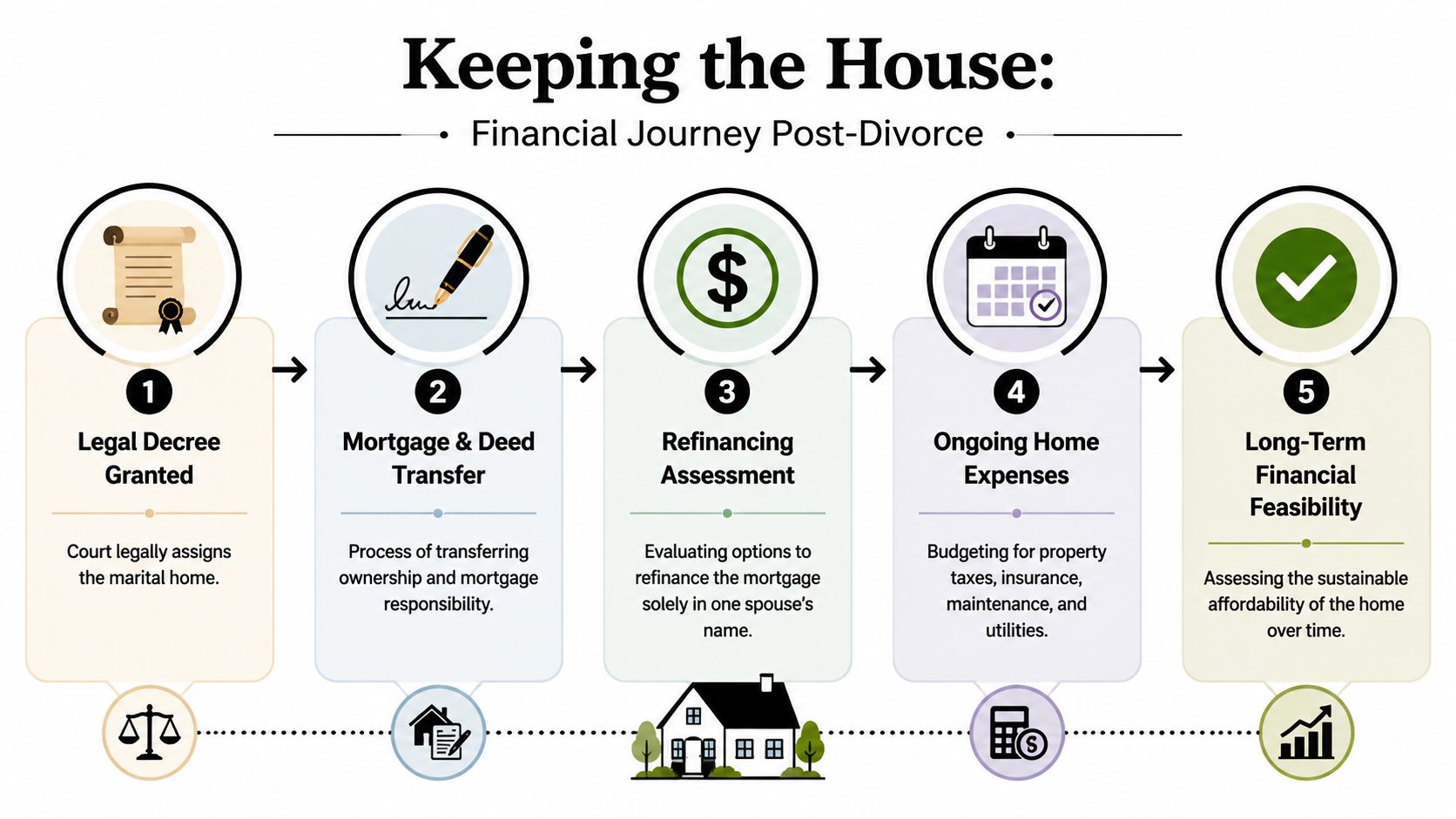
A major hurdle is financing. Even if a divorce decree awards the home to one spouse through a buyout, that spouse still must qualify to refinance the mortgage alone. In a challenging rate environment, debt-to-income limits can make that impossible, which often forces a sale despite the original agreement, as discussed in this article about refinancing and keeping the house after divorce.
The decree doesn't replace lender approval
A court can assign responsibility for the house between spouses. A lender is a different decision-maker.
If both names remain on the loan, the spouse who moved out may still be tied to that debt. That can affect future borrowing and leave both parties financially connected long after the marriage ends. For that reason, any proposal for one spouse to keep the home should be stress-tested early.
This short video addresses that issue from a practical standpoint.
Questions to answer before you fight to keep the house
Before pushing for the home, I usually tell clients to get realistic answers to a few questions:
- Can you refinance on one income: A lender's standards will matter more than the divorce decree.
- Can you handle the full monthly cost: Mortgage, insurance, taxes, utilities, and maintenance all remain after divorce.
- Can you pay the other spouse's share: A buyout has to come from somewhere.
- What happens if refinancing fails: Your agreement should address that possibility.
A house can be emotionally affordable and financially unaffordable at the same time.
Budget first, negotiate second
A workable plan usually starts with a post-separation budget, mortgage review, and a lender conversation. Some people also review likely legal costs early so the house decision isn't made in isolation. For readers comparing the broader expense picture, the cost of divorce in North Carolina is another practical part of the analysis.
This is also one place where outside professionals help. An attorney handles the legal structure. A mortgage professional tests refinance options. A tax adviser can flag issues around sale timing or transfer consequences. The Law Office of Bryan Fagan also publishes a video-center topic on keeping the house in divorce, which reflects how often this issue turns on both legal and financial planning.
FAQ Who Gets the House in a North Carolina Divorce
What if my name isn't on the deed but we bought the house during the marriage
Title alone doesn't decide the issue. If the home was acquired during the marriage, it may still be treated as marital property. That means you may have a claim to the home's equity even if your name never appeared on the deed.
The important documents usually include the deed, closing records, mortgage statements, and any records showing how the home was paid for.
What if I owned the house before the marriage
A house owned before marriage may be separate property, but the analysis doesn't always stop there. If marital funds were used for mortgage payments, repairs, or improvements, the marital estate may have a claim related to the property.
These cases often turn on tracing and documentation. You should gather purchase records, loan history, and proof of any separate funds used in connection with the house.
Can I force my spouse to move out during separation
Not automatically. Moving out, staying in the house, or demanding exclusive possession can involve several legal and practical issues. Safety concerns, children, finances, and temporary court orders may all matter.
Do not assume that leaving the home means giving up your interest. It usually doesn't. But moving out without a plan can create problems, so get legal advice before making that decision.
What if we can't agree on what the house is worth
That happens often. If you can't agree, the dispute usually moves toward formal valuation. Attorneys commonly use appraisals, mortgage payoff information, and supporting financial records to build a number that can be negotiated or presented in court.
A guessed value usually leads to a bad settlement. A documented value gives both sides something concrete to work from.
What should I do right now if the house is the biggest issue in my divorce
Start with a short checklist:
- Collect records: Deed, mortgage statements, tax bills, insurance records, and any refinance information.
- Map out the timeline: Purchase date, separation date, major repairs, and any recent value changes.
- Build a realistic budget: Include all housing costs, not just the monthly mortgage.
- Avoid casual promises: Don't agree to a buyout amount or move-out schedule without understanding the legal and financial impact.
- Schedule legal advice early: The sooner you understand your position, the more options you usually have.
Take the Next Step to Protect Your Home and Future
The answer to who gets the house in a divorce in North Carolina is rarely simple. The law looks at fairness through equitable distribution. The home must be classified and valued properly. Then the practical side takes over. Can one spouse refinance, afford the property, and balance the equity fairly?
Those are fact-specific questions. No article can tell you exactly what will happen in your case, and no ethical lawyer should promise that outcome in advance.
What you can do now is get clear advice before you make a move that affects your home, your children, or your long-term finances. A thoughtful strategy early in the process often makes the difference between a workable resolution and a costly mistake.
If you're dealing with separation, divorce, or a dispute over the marital home, the Law Office of Bryan Fagan can help you evaluate your options under North Carolina law, understand the financial trade-offs, and prepare a strategy developed for your family and property situation. Schedule a consultation to discuss the house, your broader equitable distribution issues, and the next steps for protecting your future.