When a loved one passes away, the word "probate" often comes up, bringing with it a wave of confusion and stress. The North Carolina probate process is simply the formal, court-supervised system for settling a person’s final financial affairs. It's the legal roadmap for making sure their debts are paid and their remaining assets go to the right people. We understand this is a difficult time, and our goal is to provide clear, empathetic guidance to help you navigate this journey.
What Exactly Is the North Carolina Probate Process?
Think of probate as the official closing of someone's financial life. It is the court's way of validating a will, gathering all the property, paying off final bills, and then distributing whatever is left to the correct heirs and beneficiaries.
In North Carolina, this whole process is overseen by the Clerk of Superior Court. The case is opened and managed in the county where the deceased person (known in legal terms as the "decedent") officially lived when they died.
Key Players in the Probate Process
You'll hear a few important terms during this process. The main one is the Personal Representative, which is the legal title for an "Executor" (if named in a will) or an "Administrator" (if there is no will). This person is appointed by the Clerk of Court and given the authority to manage the estate.
The Personal Representative has a lot of responsibility, all outlined in Chapter 28A of the North Carolina General Statutes. Their main duties include:
- Gathering and protecting all the estate's property.
- Creating a detailed inventory of every asset.
- Notifying all potential heirs and creditors of the death.
- Paying the estate's valid debts, bills, and taxes.
- Distributing the remaining assets as directed by the will or state law.
Real-World Scenario: Let's say your mother passed away in Raleigh (Wake County) and named you as the Executor in her will. You would file an application with the Wake County Clerk of Superior Court. Once the Clerk officially appoints you, you become the Personal Representative, with the legal power to handle her bank accounts, sell her property, and give her assets to the beneficiaries she chose.
A Note on Fiduciary Duty: The Personal Representative has a fiduciary duty to the estate. This is the highest legal standard of care, meaning they must act with complete honesty, prudence, and loyalty, always putting the estate's interests ahead of their own. Mismanaging funds or favoring one heir over another is a serious breach of this duty.
The Purpose of a Structured Process
While the North Carolina probate process can feel complicated with its strict rules and deadlines, it’s designed to protect everyone involved. It creates a transparent and orderly system that helps prevent fraud, settle arguments, and ensure a person's final wishes are honored exactly as the law requires.
Our goal is to make this legal journey less intimidating by giving you clear, practical information. It can be a complex road, but with the right guidance and support, it is absolutely manageable.
Choosing Your Path in Estate Administration
Not every estate follows the same script through the North Carolina court system. Think of it like a road trip—some routes are quick and direct, while others are more scenic and involved. The path you'll take for estate administration depends entirely on the estate's size and complexity. Understanding these options is the first step in setting realistic expectations for the North Carolina probate process.
North Carolina law actually provides three distinct procedures for settling an estate. Which one you'll use depends on factors like the total value of the assets, who the beneficiaries are, and whether a valid will exists. Let’s break down these paths so you can see which one most likely fits your situation.
Collection by Affidavit for Small Estates
For very small estates, North Carolina offers a simplified process called Collection by Affidavit that sidesteps formal probate entirely. It's often called a "small estate affidavit," and it's designed to be a faster, less expensive way to transfer assets to the rightful heirs.
This direct path is available only if the deceased person's personal property, after subtracting any liens, doesn't add up to more than $20,000. If the surviving spouse is the sole heir of the estate, that limit increases to $30,000. It's important to note this process generally doesn't cover real estate, aside from a limited interest a surviving spouse might retain.
- Who It's For: Estates with minimal personal property, like bank accounts, vehicles, and personal belongings.
- Key Requirement: The total value of personal property must fall below the legal limit.
- The Process: The heir files a specific form, the Affidavit for Collection of Personal Property (AOC-E-203), with the Clerk of Superior Court. This can only be done at least 30 days after the date of death. Once the Clerk approves it, this affidavit gives the heir the authority to collect assets directly from banks or the DMV without a full court case.
Real-World Scenario: Imagine your uncle passed away owning only a $5,000 checking account and a car valued at $8,000. His total personal property is $13,000—well under the $20,000 limit. In this case, you could use Collection by Affidavit to settle his affairs quickly, without the time and expense of a formal probate case.
Summary Administration for a Surviving Spouse
Another streamlined option is Summary Administration, which was created specifically for a surviving spouse who is the sole beneficiary of the estate. This can be true whether they are named in a will or inherit everything because there was no will (intestacy). This path significantly simplifies the process, but it comes with a critical requirement.
To qualify, the surviving spouse must be the only person entitled to inherit the deceased's property. If the will names children, a charity, or anyone else as a beneficiary alongside the spouse, this option is off the table.
Formal Administration: The Standard Probate Path
When an estate doesn’t qualify for either Collection by Affidavit or Summary Administration, it must go through Formal Administration. This is the most structured and comprehensive version of the probate process, involving full court supervision from beginning to end.
Formal Administration is typically required for:
- Larger estates where assets exceed the small estate limits.
- Any estate that includes real property that must be sold to pay off debts.
- Situations involving complex assets, multiple beneficiaries, or potential family disputes.
This is the path most people picture when they think of "probate." It involves appointing a Personal Representative, formally notifying creditors, creating an inventory of all assets, filing accountings with the court, and finally, distributing the property to the heirs. While it’s certainly more involved, it provides the legal framework needed to properly and transparently settle more complicated estates.
For those wanting to help their loved ones bypass this formal process down the road, it's wise to learn more about how to avoid probate in North Carolina through proactive estate planning.
To help you see the differences more clearly, here’s a quick comparison of the options North Carolina law provides.
North Carolina Estate Administration Options at a Glance
| Administration Type | Who It's For | Asset Value Limit | Key Benefit |
|---|---|---|---|
| Collection by Affidavit | Heirs of small estates with only personal property. | $20,000 (or $30,000 for a spouse as sole heir) | Avoids formal probate entirely; very fast. |
| Summary Administration | A surviving spouse who is the sole heir of the estate. | No specific asset limit, but depends on the will/intestacy. | Streamlined process; less court oversight than formal administration. |
| Formal Administration | Larger, more complex estates, or those with disputes or real estate. | Any estate not qualifying for the simpler options. | Provides a clear, court-supervised legal structure to resolve all issues. |
Each path is designed for a different scenario, and choosing the right one from the start can save significant time, money, and stress.
The Step-by-Step Formal Probate Roadmap
When an estate requires formal administration, it follows a structured, court-supervised path to ensure every legal and financial detail is handled correctly. While it’s the most involved of North Carolina’s estate options, it’s best to think of it as a detailed blueprint for settling a loved one's affairs.
The North Carolina probate process, once it enters formal administration, is broken down into clear, sequential stages. Each stage comes with specific duties for the Personal Representative. Understanding this roadmap from the beginning can make the entire journey feel less intimidating, turning a seemingly overwhelming task into a series of manageable steps.
Let's walk through the formal probate journey from start to finish. The graphic below illustrates the different paths an estate can take, with the most detailed being the formal process we're about to explore.
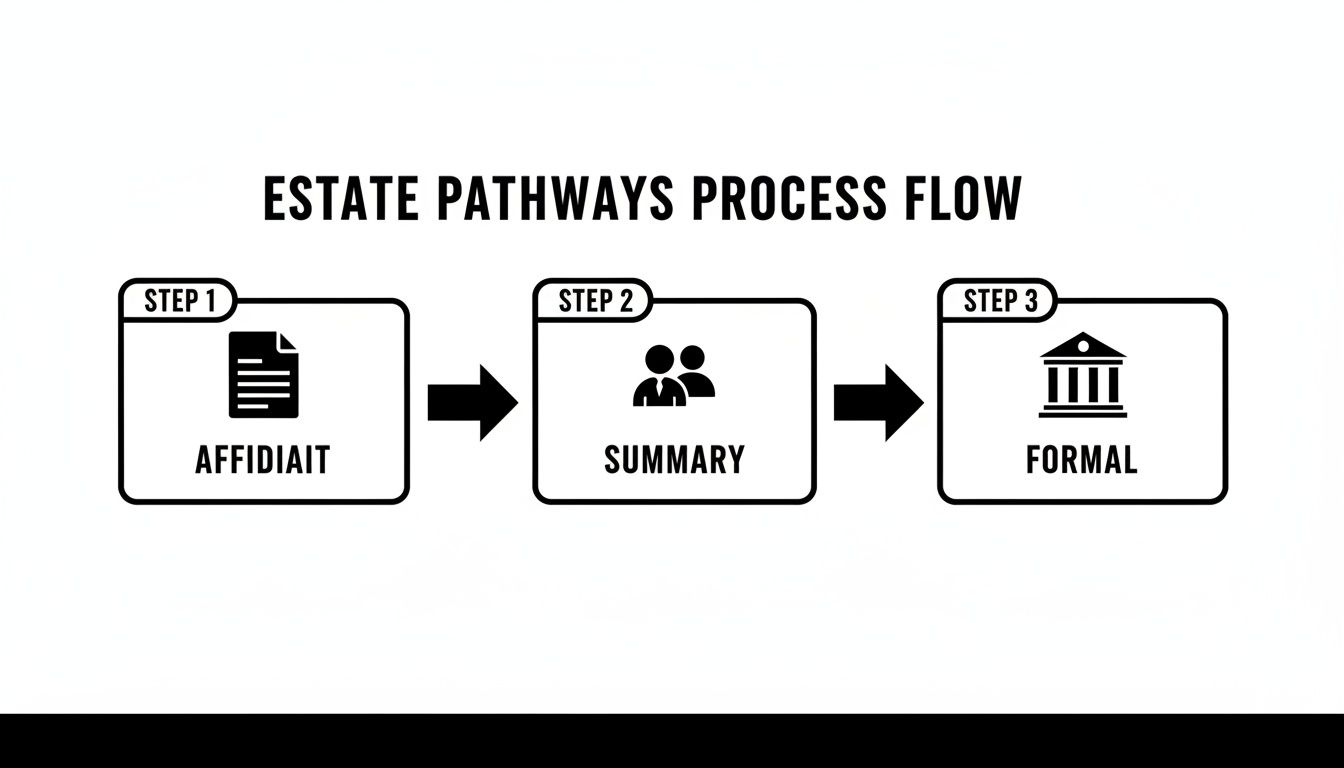
As you can see, the complexity grows from a simple affidavit to the comprehensive formal probate handled in court. This is the path we’ll now break down.
1. Applying for Probate and Appointing the Personal Representative
The first official step is to open the estate with the Clerk of Superior Court in the county where the deceased lived. This is done by filing an Application for Probate and Letters (Form AOC-E-201). You’ll need to submit this along with the original will, if one exists, and a certified death certificate.
This application gives the court crucial information about the deceased, their known heirs, and the person nominated to serve as the Personal Representative. After reviewing the application, the Clerk will formally appoint the Personal Representative by issuing either Letters Testamentary (for an executor named in a will) or Letters of Administration (for an administrator when there is no will). These "Letters" are the official documents granting the legal authority to manage the estate.
2. Notifying Heirs and Creditors
Once appointed, the Personal Representative’s first major task is to provide notice to all interested parties. Within 20 days of receiving the Letters, they must mail a formal notice to all heirs and beneficiaries of the estate.
At the same time, under N.C.G.S. § 28A-14-1, the Personal Representative has to publish a "Notice to Creditors" in a local newspaper. This notice informs anyone the deceased may have owed money to that they have a specific window—typically 90 days from the notice's first publication—to come forward and submit their claims for payment. This step is absolutely critical for identifying and eventually settling all of the estate's legitimate debts.
3. Inventorying All Estate Assets
Within three months of being appointed, the Personal Representative must conduct a thorough search for all assets the decedent owned and file a detailed list with the court. This is done using the Inventory for Decedent's Estate (Form AOC-E-505).
This inventory has to include everything the decedent owned that is subject to probate. Think of it as a complete financial snapshot. It typically includes:
- Real estate located in North Carolina
- Bank and investment accounts
- Vehicles, boats, and other titled property
- Personal belongings like furniture, jewelry, and collectibles
Each asset must be listed with its fair market value as of the date of death. This inventory creates the financial baseline for the entire probate process.
4. Managing Debts and Paying Taxes
With the inventory complete, the Personal Representative can shift focus to managing the estate's finances. This involves paying any valid creditor claims in the order of priority set by North Carolina law. It also means filing final income tax returns for the decedent and an income tax return for the estate itself if it generates any income during the administration period.
This stage demands meticulous record-keeping. Every dollar that comes in and every bill that gets paid out must be carefully tracked and accounted for.
5. Filing Required Court Accountings
The Clerk of Court needs to see that the Personal Representative is handling everything by the book. Within one year of being appointed, and annually after that, the PR must file a formal Annual/Final Account (Form AOC-E-506).
This accounting is essentially a detailed financial report that shows:
- All assets received by the estate
- Any income earned (like interest or rent)
- All debts, taxes, and administrative expenses that were paid
- The assets that are left for distribution
The Clerk reviews these accountings to ensure the Personal Representative is properly fulfilling their fiduciary duty. The sheer volume of these cases highlights why precision is so important; you can learn more about North Carolina probate statistics and what they mean for families.
6. Distributing Assets and Closing the Estate
After all debts and taxes have been paid and the Final Account is approved by the Clerk, the Personal Representative can finally move to the last step: distributing the remaining assets. These assets go to the beneficiaries named in the will or, if there's no will, to the heirs according to state intestacy laws.
Once all beneficiaries have received their share and have signed receipts confirming it, the Personal Representative can file a petition to be officially discharged from their duties and formally close the estate. This final action concludes the North Carolina probate process.
Understanding Probate Timelines and Costs in North Carolina
When a loved one passes away, two of the first questions families ask are, "How long is this going to take?" and "How much will it cost?" The uncertainty around time and money can add a heavy layer of stress to an already emotional period. Getting clear, realistic answers is the first step toward gaining peace of mind.
Even for a straightforward estate, most families in North Carolina are surprised to learn that probate usually takes nine to twelve months to complete. That timeline isn’t a reflection of inefficiency; it’s a result of mandatory waiting periods and legal procedures baked into North Carolina law. These steps can't be rushed, no matter how organized the personal representative is. You can read more about why probate often takes longer than expected in North Carolina on thehappylawyernc.com.
Why the NC Probate Process Takes Time
That nine-to-twelve-month estimate isn't arbitrary. It's dictated by legal deadlines put in place to protect everyone involved, from heirs to creditors. Several key stages have non-negotiable waiting periods that set the pace for the entire process.
The most significant waiting period is for creditors. After the "Notice to Creditors" is published, N.C.G.S. § 28A-14-1 requires a 90-day window for anyone owed money by the estate to come forward and file a claim. This period can't be shortened because it ensures all potential debts are accounted for before any assets are handed out to heirs.
A Note on Efficiency: While some legal timelines are set in stone, an experienced probate attorney can prevent unnecessary delays. Proactive management of paperwork, prompt communication, and anticipating potential roadblocks are key to keeping the process moving as smoothly as the law allows.
Breaking Down the Costs of Probate
The costs of probate aren't random—they are structured and predictable. Knowing what to expect financially can help you budget and avoid surprises down the road. The primary expenses fall into a few key categories.
1. Court Filing Fees
To open an estate, the Clerk of Superior Court charges an initial filing fee. This cost is calculated based on the total value of the decedent's personal property. In North Carolina, the fee is $0.40 per $100 of value, with a minimum charge of $15 and a maximum of $6,000.
2. Personal Representative Commission
The person responsible for managing the estate—the Personal Representative—is entitled to be paid for their work. Under North Carolina law (N.C.G.S. § 28A-23-3), this commission can be up to 5% of the estate's receipts and disbursements. The Clerk of Court must approve the final amount to ensure it is fair and reasonable for the work involved.
3. Bond Premiums
In many cases, the Clerk will require the Personal Representative to post a bond, which acts like an insurance policy to protect the estate’s assets from being mismanaged. The cost of this bond is called a premium, and it is paid by the estate as an administrative expense. A well-drafted will can sometimes waive this requirement.
4. Attorney Fees
While you are not legally required to hire a lawyer, most Personal Representatives choose to work with an attorney to navigate the complexities of the North Carolina probate process. Attorney fees are paid from the estate’s assets and are considered a necessary expense to ensure everything is handled correctly and legally. These fees will vary depending on how complex the estate is and the level of guidance required.
Avoiding Common Probate Complications and Delays

Even an estate that looks straightforward on paper can hit unexpected roadblocks during the North Carolina probate process. These hurdles don't just cause frustrating delays; they can also strain family relationships and drive up the costs of administration. The best way to keep the process moving smoothly is to anticipate these issues before they start.
Many of these problems are entirely preventable. Simple executor mistakes, missing paperwork, or confusing creditor claims often create gridlock that experienced guidance could have easily avoided. You can learn more about common North Carolina probate delays and how to prevent them on ncplanning.com.
Navigating Beneficiary Disagreements
Disputes among beneficiaries are some of the most emotionally draining complications in any probate case. Tensions can flare over how a will should be interpreted, who gets personal items with sentimental value, or whether the Personal Representative is acting fairly.
What starts as a simple disagreement over a parent's possessions can quickly escalate into a formal court battle. These conflicts not only stall the estate's closing but can also inflict lasting damage on family harmony.
Clear and consistent communication from the Personal Representative is the best defense. When heirs feel informed, included, and treated with fairness, it builds trust and leaves little room for suspicion to grow.
Will Contests and Their Impact
A will contest is a more serious legal challenge where an interested party formally disputes the will's validity. In North Carolina, someone can contest a will for several reasons:
- Lack of Testamentary Capacity: The person claims the deceased wasn't of sound mind when they signed the will.
- Undue Influence: The argument is that someone coerced or manipulated the deceased into creating or changing their will to benefit them.
- Improper Execution: The will fails to meet the strict signing and witnessing requirements under North Carolina law (N.C.G.S. § 31-3.3).
A will contest brings the entire probate process to a halt. Before a single asset can be distributed, the court must resolve the challenge, which can add months or even years to the timeline and significantly increase legal costs.
Common Executor Mistakes to Avoid
The Personal Representative has a fiduciary duty to act in the estate's best interest, but it’s a role filled with potential missteps for the inexperienced. Even small errors can lead to personal liability and significant delays.
Common, preventable mistakes include:
- Missing a Deadline: Failing to file the estate inventory within three months or an annual accounting on time can trigger penalties from the Clerk of Court.
- Poor Record-Keeping: Not keeping a meticulous log of every dollar spent and every asset managed can lead to rejected accountings and accusations of mismanagement.
- Improperly Paying Creditors: North Carolina law sets a strict order for paying an estate's debts. Paying a lower-priority bill before a higher-priority one is a serious breach of duty that can make the Personal Representative personally responsible for the mistake.
These potential pitfalls highlight just how important it is to have a clear strategy from day one. For families hoping to secure their futures and avoid these issues, understanding how to create legally sound wills and trusts is a crucial first step.
Having proactive legal counsel helps a Personal Representative navigate these risks effectively. An attorney can help mediate conflicts before they escalate, ensure every deadline is met, and keep the administration moving forward—protecting both the estate and the person in charge.
Get Experienced Guidance Through North Carolina Probate
Navigating the North Carolina probate process can feel overwhelming, especially while grieving the loss of a loved one. The web of legal paperwork, court deadlines, and fiduciary duties is complex, and you don’t have to face it alone. An experienced North Carolina probate attorney acts as your advocate, protecting the estate from liability and ensuring your loved one’s final wishes are honored correctly and efficiently.
Your Dedicated Partner in North Carolina Estate Law
At the Law Office of Bryan Fagan, we specialize in North Carolina estate administration. We provide the dedicated legal support you need to navigate the Clerk of Superior Court’s requirements, manage creditor claims, and prevent costly errors that could lead to personal liability for an executor. Our role is to handle these legal complexities so you can focus on what truly matters—your family. We translate the court’s demands into a clear action plan, manage all required filings, and provide strategic advice at every stage.
Our Commitment to You: We believe settling an estate should be a process of closure, not confusion. Our goal is to bring clarity, efficiency, and peace of mind to your family during a difficult time, ensuring the entire North Carolina probate process is handled with dignity and precision.
Proactive planning is always the best way to secure your family's future. You might also be interested in learning more about how our estate planning services can help protect your legacy.
Frequently Asked Questions About the NC Probate Process
Going through the North Carolina probate process can bring up a lot of questions. We’ve answered some of the most common concerns we hear from families across the state to help you find clarity during a difficult time.
What assets are exempt from probate in North Carolina?
Many people are relieved to find out that not all of a loved one’s assets have to go through probate. Certain types of property are designed to pass directly to beneficiaries or co-owners by law, which means they bypass the court process entirely.
Assets that typically avoid probate in North Carolina include:
- Property in a Living Trust: Any assets already placed in a living trust are managed by the trustee according to the trust’s rules, not the will.
- Life Insurance and Retirement Accounts: Policies like life insurance, 401(k)s, and IRAs that have a designated beneficiary pay out directly to that person.
- Jointly Owned Property: Real estate owned as "joint tenants with right of survivorship" automatically passes to the surviving owner when one owner dies.
- Payable-on-Death (POD) Accounts: Bank accounts with a POD designation go straight to the person named on the account.
Real-World Scenario: If your mother named you as the beneficiary on her $100,000 life insurance policy, that money comes directly to you and is not part of her probate estate. This means you do not have to wait for the probate process to conclude to receive those funds.
What happens if someone dies without a will in North Carolina?
When a person dies without a valid will, it’s known as dying "intestate." In this scenario, the state of North Carolina does not simply take the property. Instead, the law applies a rigid, one-size-fits-all formula for distributing the assets.
This formula is laid out in the North Carolina Intestate Succession Act (N.C.G.S. Chapter 29). The law establishes a strict hierarchy for who inherits, based purely on their relationship to the person who passed away. Who gets what depends entirely on which family members survive.
For example, if the decedent is survived by a spouse and two children, the spouse inherits the first $60,000 of personal property, one-third of the remaining personal property, and one-third of the real estate. The children inherit the rest. This rigid division may not align with what the decedent would have wanted, which highlights the importance of having a will.
Do I need a lawyer for probate in North Carolina?
Legally, you are not required to hire an attorney for probate. For a very straightforward case that qualifies for a small estate affidavit, you might be able to handle it yourself. However, stepping into the Personal Representative role without legal guidance carries significant personal risk.
As the Personal Representative, you are held personally liable for any mistakes made during the administration of the estate. An error—like missing a filing deadline or paying a creditor improperly—could mean you have to cover the financial loss from your own pocket. The probate process is filled with strict legal duties, deadlines, and paperwork that can feel overwhelming. An experienced probate attorney acts as your guide, helping you avoid these costly mistakes and ensuring your loved one’s final wishes are honored correctly.
Schedule Your Consultation with a North Carolina Probate Attorney Today
If you are an executor, administrator, or heir to an estate in North Carolina, you don’t have to manage this burden by yourself. The legal team at the Law Office of Bryan Fagan is here to provide the experienced, empathetic guidance you need to navigate the probate process with confidence. We are committed to serving North Carolina residents by providing clear answers and a strategic plan tailored to your family's unique situation.
To discuss your case and learn how we can help, schedule a consultation with us today. Let's take the first step toward finding closure and peace of mind.